Caged Fixed Ladders · OSHA 1910.23 / EN ISO 14122-4
Roof Access Ladder with Cage
A welded safety cage that protects climbers on tall roof runs — engineered in our Shijiazhuang factory from Q235B or SS304, then load-tested batch by batch.
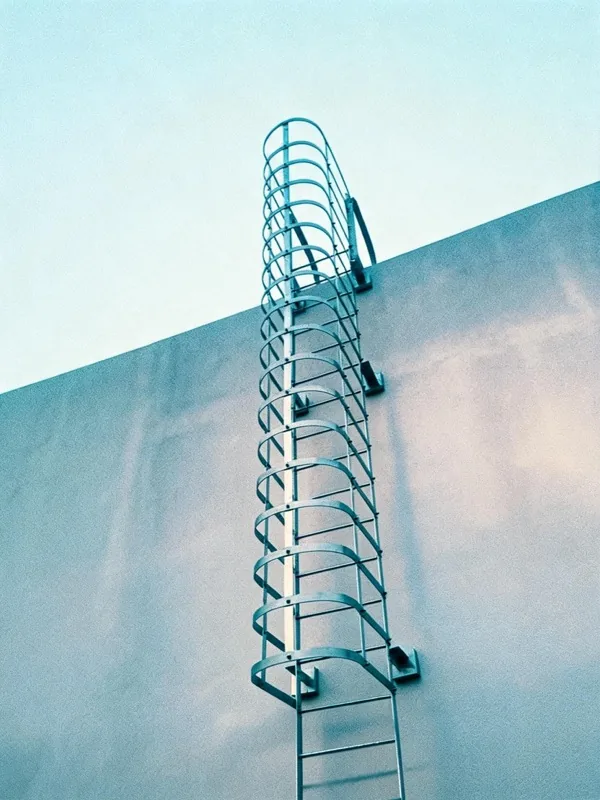
Gallery
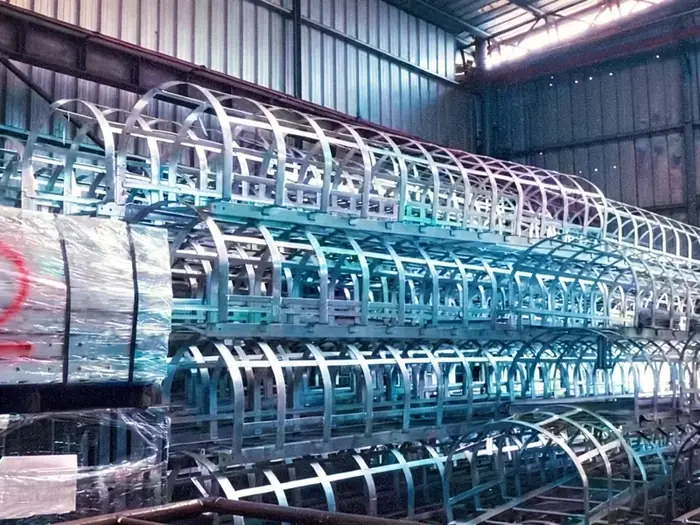 Warehouse run
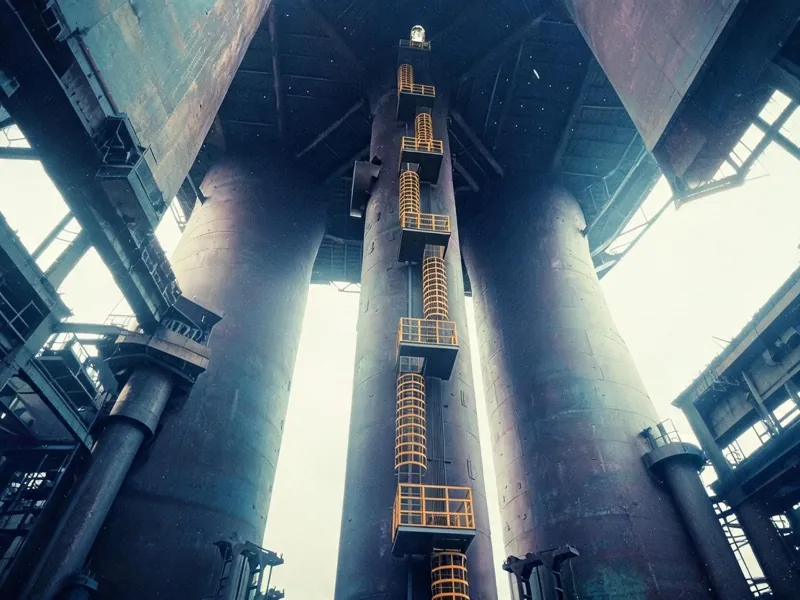 Heavy industry
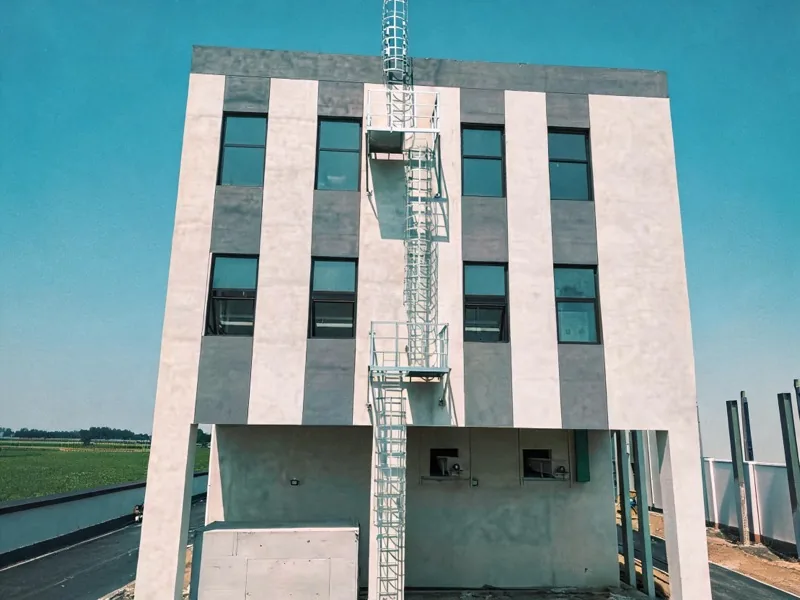 Rooftop access
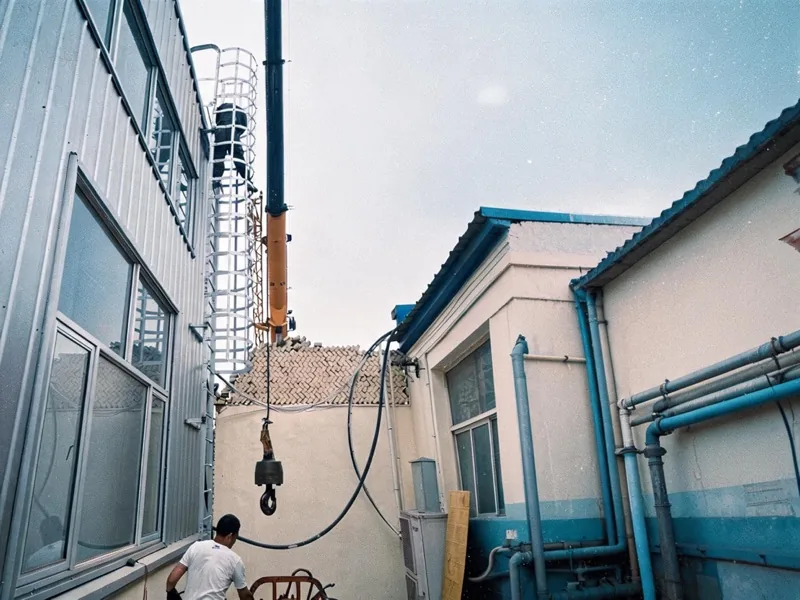 Facade access
Product Overview
What Is a Roof Access Ladder with Cage?
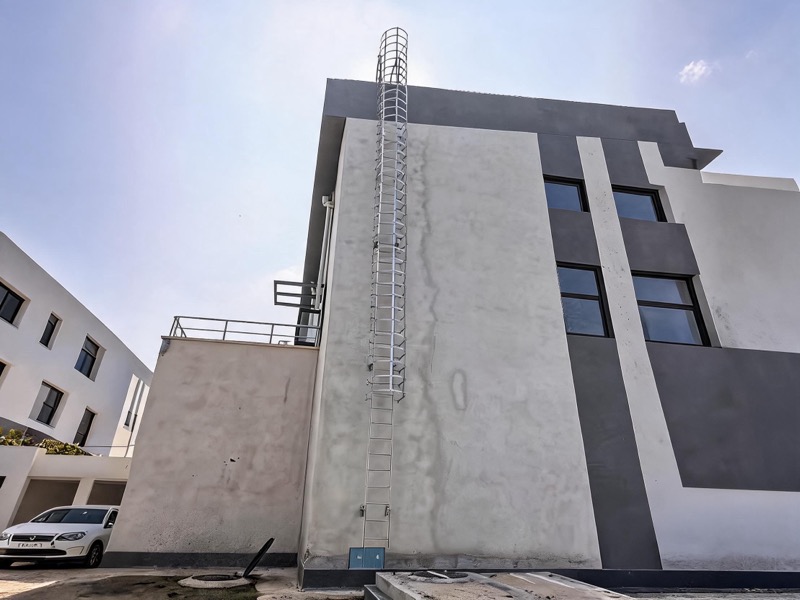
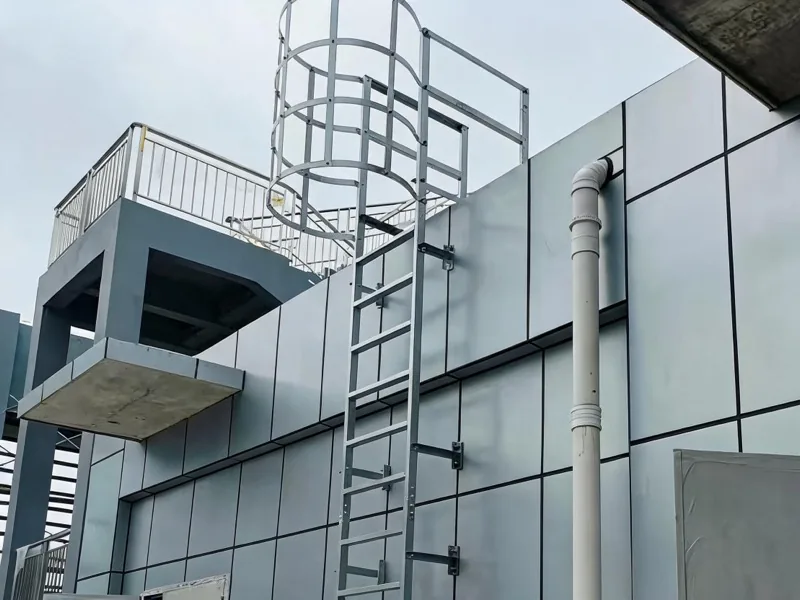
A roof access ladder with cage is a fixed vertical ladder wrapped in a hooped safety cage that catches a climber who slips backward on a tall run. We weld the cage from Q235B carbon steel or SS304 stainless, then hot-dip galvanize the carbon version to roughly 85 µm so the hoops shrug off rooftop rain and frost for years.
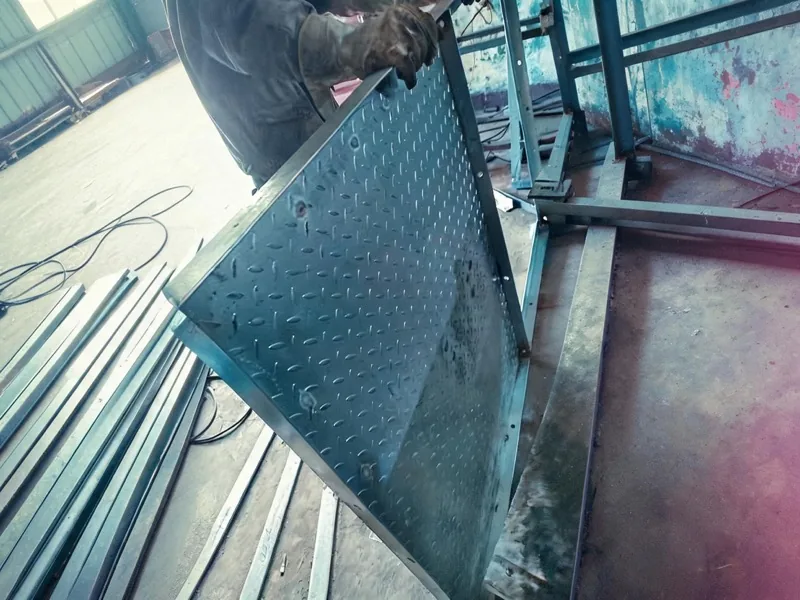
In our factory we treat the cage as a structural part, not an add-on. Each hoop is jig-welded to the stringers, every rung is checked against the 250–300 mm pitch our engineers set, and a sample from each batch goes to a tensile test before the lot ships. That habit comes from twenty-plus years of building fixed ladders for tank farms and rooftop plant rooms.
Because we sell straight from the plant, there is no middleman markup, and every order leaves with material certificates, weld reports, and load-test data. SGS or TÜV third-party inspection is available on request, and we welcome factory audits.
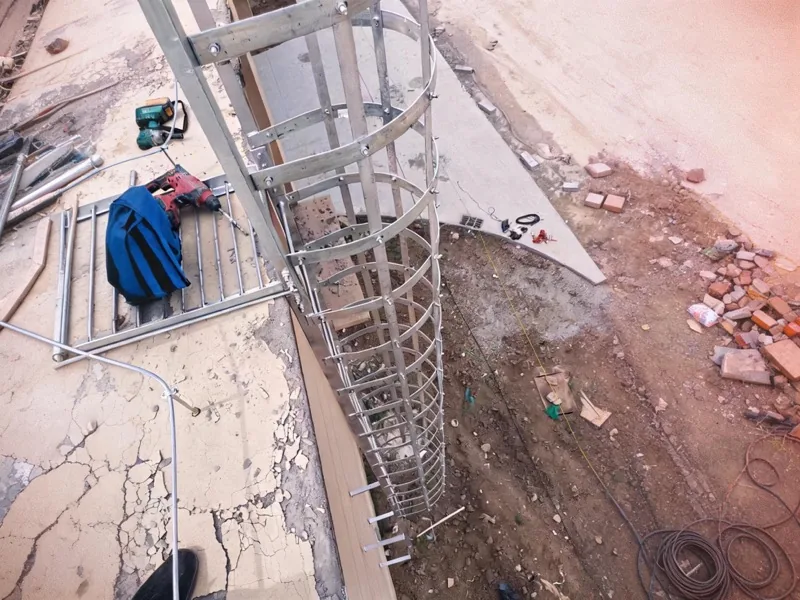
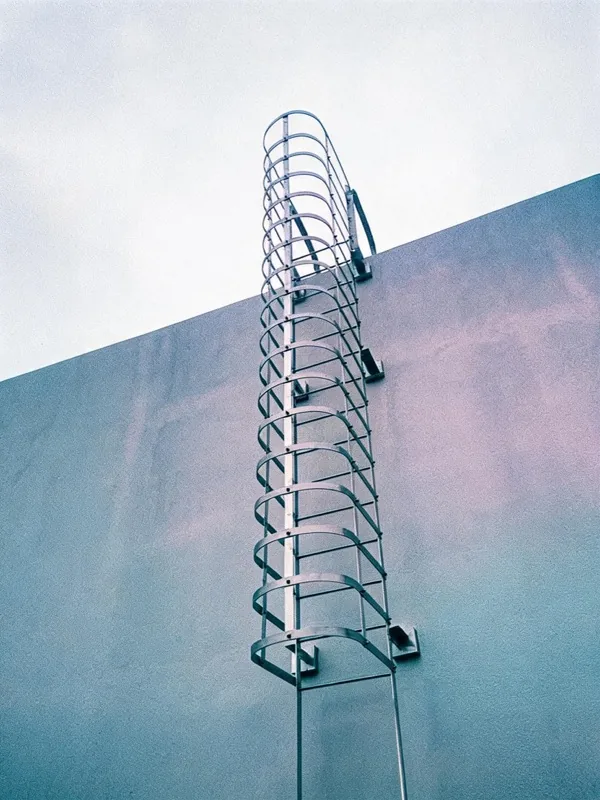
Safety cage detail — hooped guard with vertical bars
Technical Specifications
Roof Ladder Safety Cage: Specifications & Welded Hoop Design
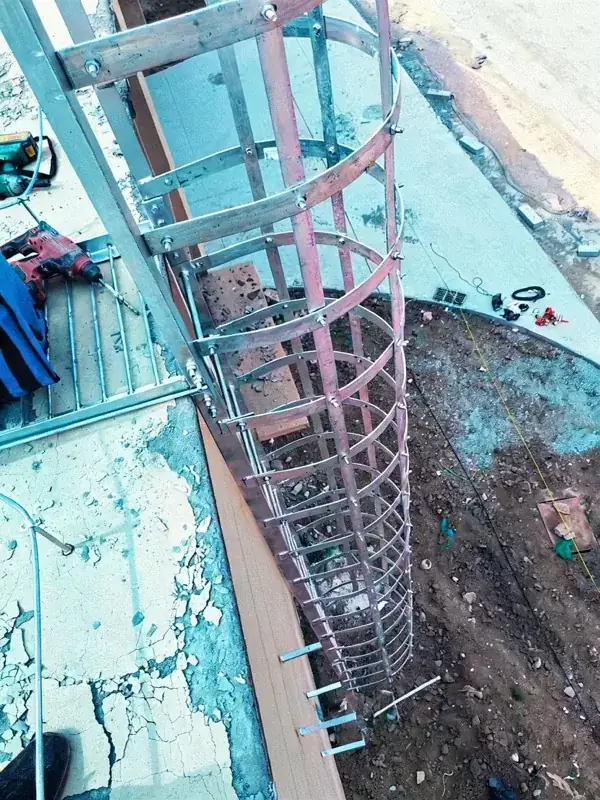
Welded cage hoops
Jig-welded to the stringers
Cage geometry at a glance
Typical caged roof access ladder dimensions. Final geometry is set to the governing code — OSHA 1910.23 for North America, EN ISO 14122-4 for Europe — and confirmed on the shop drawing.
| Parameter | Value |
|---|---|
| Ladder type | Fixed vertical, caged |
| Stringer material | Q235B / SS304 / SS316 |
| Rung spacing | 250–300 mm |
| Rung diameter | 18–20 mm (solid / serrated) |
| Stile (side rail) | 60 × 10 mm flat bar |
| Cage hoop spacing | ≤ 1500 mm (EN ISO 14122-4) |
| Cage vertical bars | 5 bars, evenly spaced |
| Cage internal depth | 650–800 mm from rung |
| Cage start height | 2.1–2.4 m above base |
| Rung point load | 1.5 kN (EN ISO 14122-4) |
| Coating | HDG ~85 µm / 304 mill finish |
| Standards | OSHA 1910.23, EN ISO 14122-4 |
| Max single flight | 6 m before rest platform |
Standards & Compliance
Cage Requirements: OSHA 1910.23 vs EN ISO 14122-4

Caged ladder on a process tank
Process-tank access project (representative)
OSHA 1910.23 cage geometry
For US-bound projects we build the cage to OSHA 1910.23: hoops banded around the climb, the cage starting roughly 2.1–2.4 m above the base and running past the top landing. OSHA now favors fall-arrest on new tall ladders, so we can quote either.
EN ISO 14122-4 safety cage
For European sites the cage follows EN ISO 14122-4, used where the fall height passes about 3 m without other protection. Hoops sit no more than 1.5 m apart with vertical bars between them, and the cage depth stays in the 650–800 mm band from the rung.
Q235B or stainless steel
Standard cages are Q235B carbon steel; for coastal, food, or chemical sites we switch to SS304 or SS316. The grade is printed on the certificate that ships with the order.
Hot-dip galvanized finish
Carbon-steel cages are hot-dip galvanized to roughly 85 µm (per ISO 1461 for the section thickness), which keeps the hoops from rusting on an exposed roof.
Proven on export tank farms
For a recent tank-farm order we supplied caged roof access ladders in SS304, each with a rest platform on the long climbs. Every unit passed third-party load testing before sea freight.
Factory-direct, fully documented
Every caged ladder ships with material certificates, weld reports, and load-test data, straight from our ISO 9001:2015 plant. SGS or TÜV inspection on request; factory audits welcome.
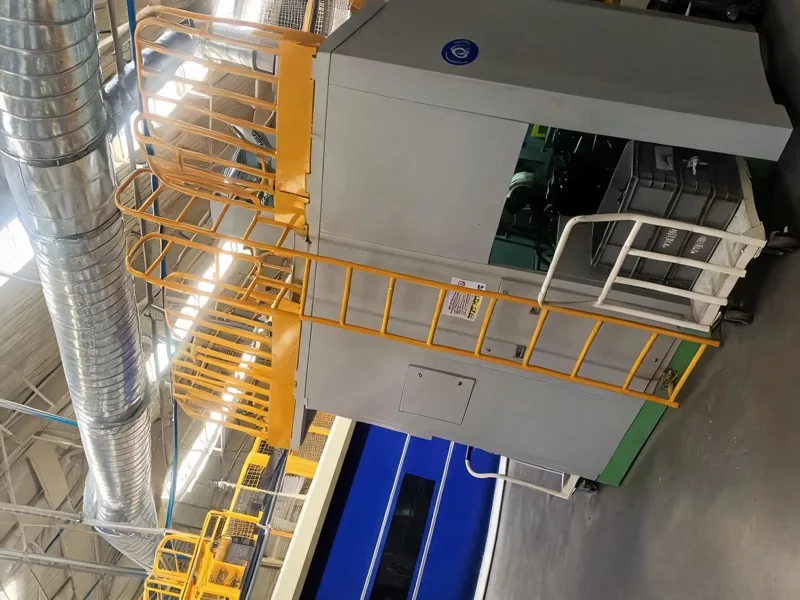

Cage Family
Related Caged Ladder Systems

FAQ
Frequently Asked Questions
Need a caged roof access ladder quote?
Send us the climb height and the governing standard. Our engineers return a stamped drawing, a cage-compliance note, and factory-direct pricing — usually within one working day.