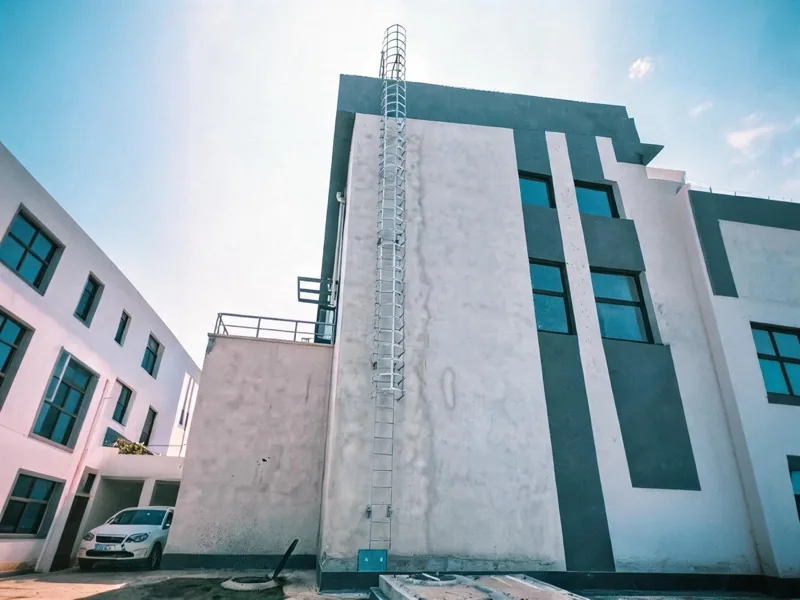
Every commercial roof access ladder we build answers one question: how do people get up there safely, day after day, for the life of the building? This hub maps the real applications — where fixed steel ladders go, what each setting demands, and which standard governs the climb. We make these units for export. The notes below come from our welders and engineers, not a sales sheet.
Dengtai is a factory-direct steel ladder manufacturer in Shijiazhuang. We have run an 8,000 m² floor since 2003, certified to ISO 9001:2015, shipping to 50+ countries. When buyers ask us to scope commercial roof access ladders, the conversation starts with the application, not the catalogue.
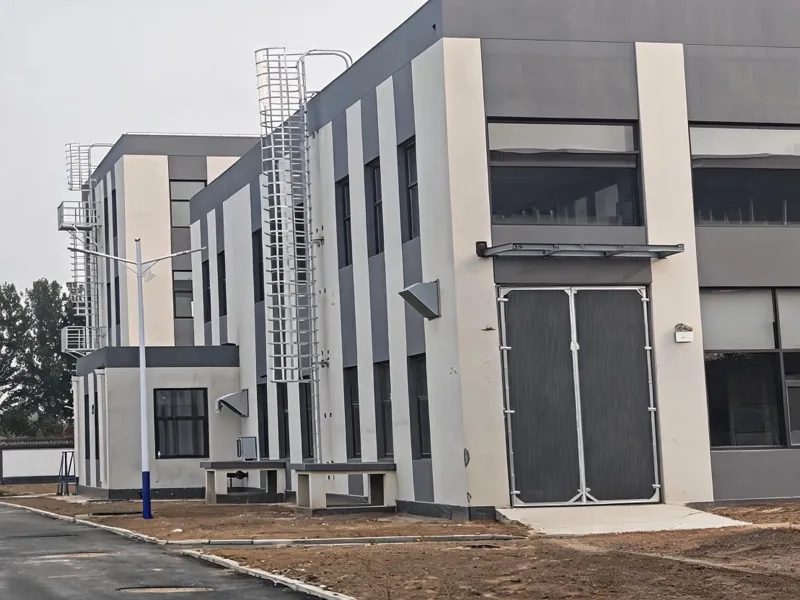
Where Roof and Access Ladders Are Used—Application Overview
Fixed access ladders show up wherever a roof, tank, or platform needs routine service. Think HVAC decks, plant rooms, silos, and parapet edges. A leaning ladder is a fall waiting to happen. A fixed ladder, anchored and rated, removes that risk.
Across our export jobs, four settings cover most demand: industrial rooftops, low-rise residential roofs, storage tanks, and confined pits. Each one changes the spec — height, cage trigger, material grade. Buyers searching for roof access ladder systems usually need a matched set: ladder, guard, and landing, designed as one. For the primer on parts and types, see What Is a Roof Ladder and our roof ladder hub.
Commercial and Industrial Rooftop Access
This is the busiest category we quote. Factories, warehouses, hotels, and refineries all need repeatable roof access for maintenance crews. Our commercial roof access ladders bolt to concrete, steel purlin, or masonry, and carry a defined load at every anchor.
The numbers matter here. Each top bracket is designed for 6 kN, a 2:1 margin over the 3 kN we pull-test to. Rung pitch holds 250–300 mm on centre per EN ISO 14122-4. Hot-dip galvanizing lands at 85–140 µm, sealing every cut edge. For heavy industrial duty we move from Q235B carbon steel to SS304, and to SS316 where chemicals or salt attack the metal.
Browse the units that fit this work: the Fixed Roof Access Ladder, the Caged Roof Access Ladder, and the Roof Cat Ladder. Infrastructure-scale jobs are covered on our roof access for infrastructure page.
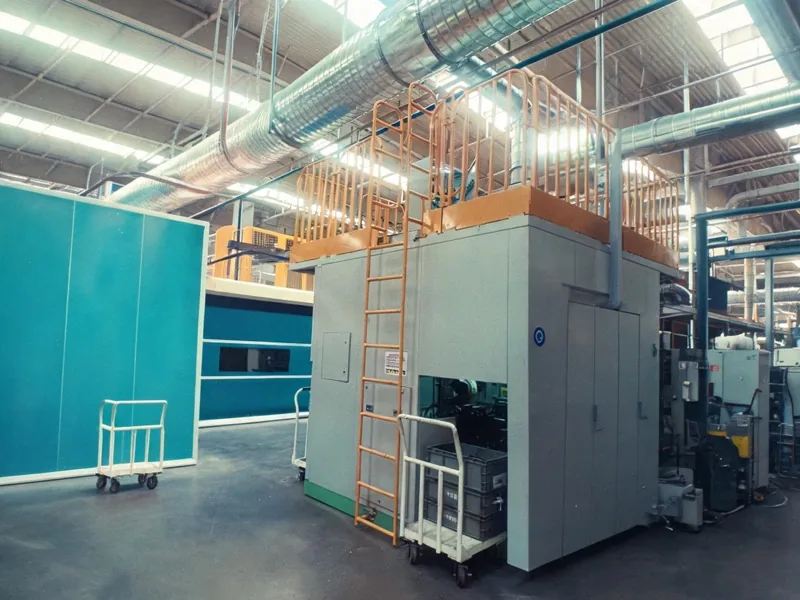
Residential and Low-Rise Applications
Homes and small buildings need a different touch. A residential roof access ladder is usually shorter, lighter, and tucked against a gable or parapet. It still has to be safe. Even a single-storey climb can drop someone three metres onto concrete.
For these jobs we keep the build tidy: a slim cat ladder with even rung spacing. The top section extends past the landing, so you step off, not lunge. Where the climb stays under 3 m, OSHA 1910.23 lets us skip the cage. Above that, the standard sets the trigger. The Roof Hatch Ladder suits internal access through a hatch opening on low-rise plant rooms.
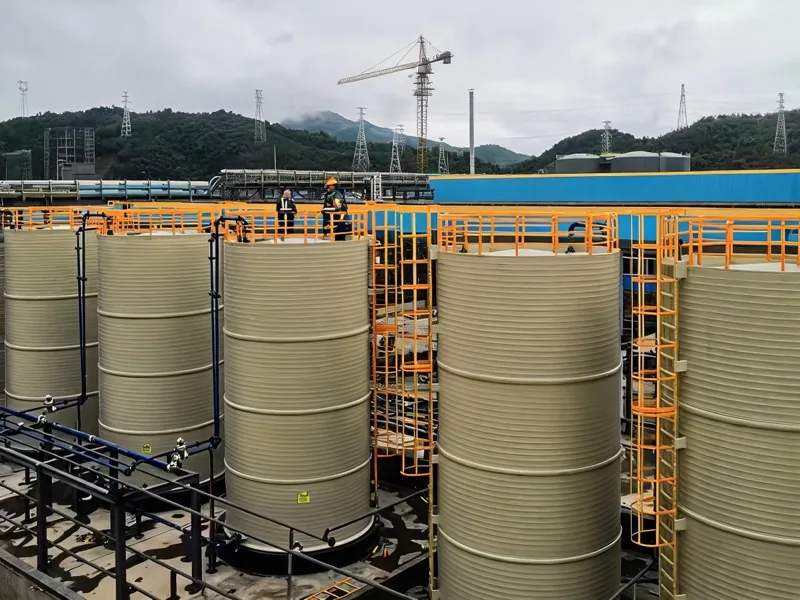
Specialized Environments: Tanks, Pits and Confined Spaces
Some climbs are nastier than a roof. Storage tanks, sumps, and confined pits each bring their own hazards — corrosion, fumes, tight clearances. We build tank access ladders and pit access ladders to handle them.
For tanks, we default to SS304 or SS316 against splash and vapour, with caged hoops past the height trigger. Pit access ladders often need a swing gate at the top and a non-slip rung for wet conditions. Confined entry adds its own rules; the ladder is one part of a wider permit system. See storage-tank work on our oil & gas access ladders page.
Choosing the Right Ladder by Application
Match the ladder to the setting, not the other way round. This table is the shortcut our engineers use when a drawing lands on the desk.
| Application | Typical ladder | Material | Governing standard |
|---|---|---|---|
| Industrial rooftop | Caged Roof Access Ladder | Q235B HDG / SS304 | OSHA 1910.23, EN ISO 14122-4 |
| Commercial roof, low climb | Roof Cat Ladder | Q235B HDG | OSHA 1910.23 |
| Residential / low-rise | Fixed Roof Access Ladder | Q235B HDG | EN ISO 14122-4, BS 4211 |
| Tank / vessel | Caged tank access ladder | SS304 / SS316 | EN ISO 14122-4 |
| Pit / confined space | Pit access ladder + gate | SS304 hot-dip | OSHA 1910.23 |
Still unsure? Send a drawing or a rough spec to our engineers via the contact page and you will get a buildable quote with a load table. Common questions are answered on the FAQ page.
Compliance Across Applications (OSHA 1910.23 / EN ISO 14122-4)
One ladder, many rulebooks. The application decides which standard governs. We build to whichever one your site falls under.
- OSHA 1910.23 — the US rule for fixed ladders, rung strength, and fall-protection triggers. It now favours ladder safety systems over cages on new climbs above 24 ft.
- EN ISO 14122-4 — the European standard for permanent means of access, rung spacing, and cage thresholds.
- BS 4211 — the UK specification for permanently fixed ladders, common on British projects.
Proof travels with every order. We sample pull-test each batch on our own rig and keep the load test data on file. Material certificates and weld inspection reports ship with the goods. SGS- or TÜV-witnessed tests are available when a project needs third-party sign-off. You buy from the people who cut the steel — no trading company, no distributor markup. Clients are welcome to audit the line in person before they commit.
Dig deeper on the products overview, the cluster guides on the roof ladder, fixed ladder, and cage ladder hubs, and the full set of engineering articles in our blog.
More application coverage: Marine & Offshore Ladders, Marine Offshore Ladders for Ships & Platforms, Oil & Gas Access Ladders, Commercial Roof Access Ladders, Commercial Roof Access for Public Buildings, and Warehouse & Industrial Access Systems.