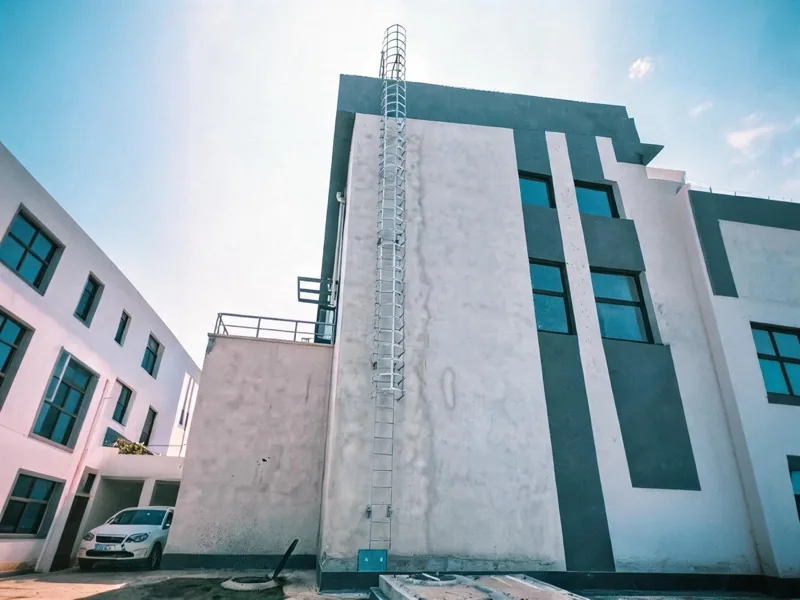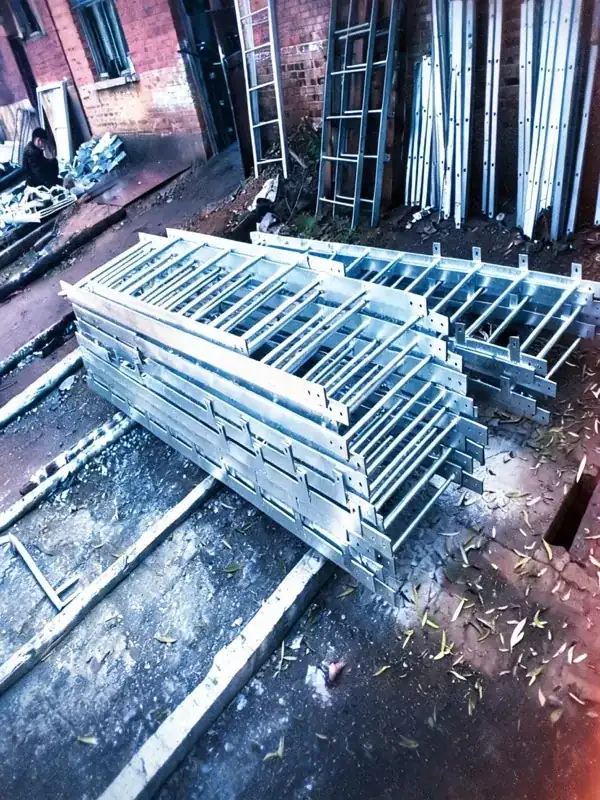
A roof ladder is a permanently fixed steel ladder that gives safe, repeatable access to a roof for maintenance, inspection, and equipment service. It is not a portable leaning ladder. It bolts to the wall or parapet, carries a defined load at every anchor, and stays in place for the life of the building. This hub pulls together everything our engineers get asked about: the types, the standards, how to choose, and what factory-direct pricing actually buys you.
We build these units for export. Dengtai is a factory-direct steel ladder manufacturer in Shijiazhuang, ISO 9001:2015 certified, running an 8,000 m² floor since 2003. The notes below come from the people who cut and weld the steel, not from a brochure.
What Is a Roof Ladder
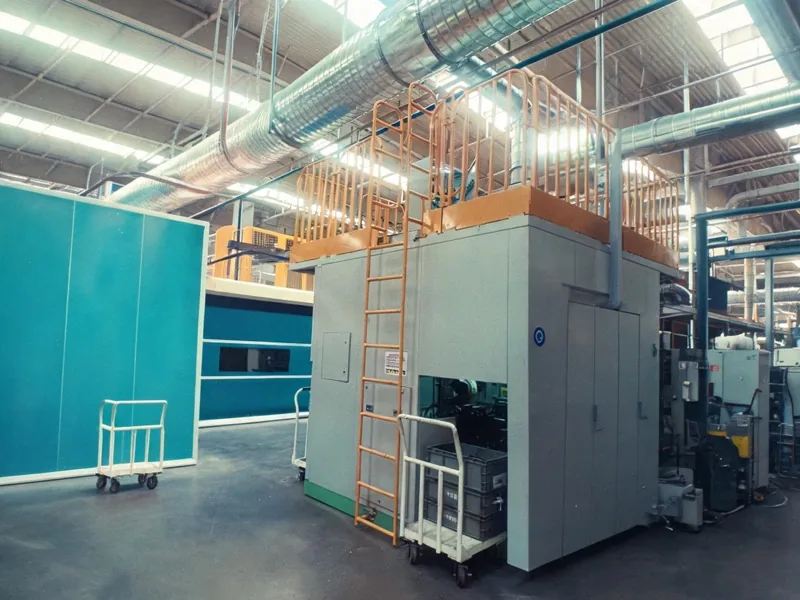
A roof ladder is a fixed vertical or near-vertical access ladder mounted to a structure so workers can reach roof level without scaffolding. Picture a refinery walkway, a warehouse plant deck, or a hotel rooftop chiller. Someone has to climb up there to service the kit, and a leaning ladder against a gutter is how people fall.
The fixed roof ladder solves that. It is engineered to a standard, anchored to the substrate, and rated for a known load. Rungs sit at an even pitch. The top extends past the landing so you step off, not lunge. On taller climbs it adds a cage or a safety rail. For a fuller primer, see What Is a Roof Ladder and the practical test in Do I Need a Roof Ladder?
Types of Roof Ladders
Four configurations cover almost every roof access job we quote. Each one suits a different climb height and roof layout.
| Type | Best for | Typical climb | Standard reference |
|---|---|---|---|
| Roof Cat Ladder | Straight vertical runs up a wall or parapet | Up to 3 m before a cage is required | OSHA 1910.23, EN ISO 14122-4 |
| Fixed Roof Access Ladder | Permanent service access with pre-drilled brackets | Any height, cage added past the trigger height | EN ISO 14122-4, BS 4211 |
| Caged Roof Access Ladder | Tall exposed climbs needing fall protection hoops | Above the local cage threshold | OSHA 1910.23, EN ISO 14122-4 |
| Roof Hatch Ladder | Internal access through a roof hatch opening | Single-storey plant rooms | OSHA 1910.23 |
Cage rules differ by region, which trips up a lot of buyers. OSHA 1910.23 moved away from cages toward ladder safety systems on new fixed ladders over 24 ft, while EN ISO 14122-4 still works on a height threshold for hoops. We build to whichever rule governs your site. If you are weighing a cage against a different protection method, the Roof Ladder Alternatives guide lays out the trade-offs.
Safety and Standards
This is where a roof ladder earns its keep, and where a cheap one gets a site shut down. Three standards cover most of our export work:
- OSHA 1910.23 — the US rule for fixed ladders, rung strength, and fall protection triggers.
- EN ISO 14122-4 — the European standard for permanent means of access, rung spacing, and clearances.
- BS 4211 — the UK specification for permanently fixed ladders, common on British projects.
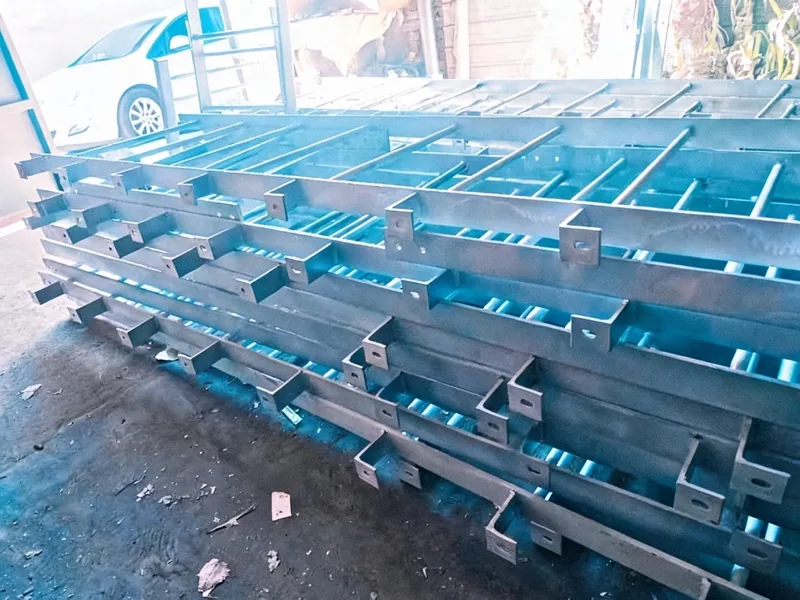
The numbers matter. Each top bracket on our roof ladders is designed to hold 6 kN, a 2:1 margin over the 3 kN minimum we test to. Rung spacing runs 250–300 mm on centre per EN ISO 14122-4. Standoff from the surface keeps grip clearance at 150–200 mm. Hot-dip galvanizing lands at 85–140 µm, above the 85 µm floor most specs ask for. We coat after fabrication, so every cut edge and drilled hole stays sealed.
We sample pull-test each batch to failure on our own rig and keep the load test data on file. SGS-witnessed pull tests are available when a project needs third-party proof. Dig deeper in Roof Ladder Safety Requirements, the honest answer in Is a Roof Ladder Safe, and the field checklist in Roof Ladder Inspection Checklist. Load questions are answered in Roof Ladder Weight Capacity.
How to Choose a Roof Ladder
Get five things right and the ladder will outlast the roof. Get them wrong and you pay twice.
- Substrate — concrete, steel purlin, and timber each need a different anchor. Tell us what you are fixing into.
- Material grade — Q235B carbon steel, hot-dip galvanized, suits most dry sites. We switch to SS304 for coastal or chemical exposure, and SS316 where salt is heavy.
- Height and cage trigger — the climb height decides whether you need a cage, a rail, or a ladder safety system under your governing standard.
- Dimensions and clearances — width, rung pitch, and landing extension are fixed by the standard, not by preference. See Roof Ladder Dimensions.
- Custom geometry — odd roof pitches, offset landings, or tight parapets need a made-to-measure unit. That is routine for us; see Custom Roof Ladder Design.
Walk through the full process in our Roof Ladder Buying Guide, then check fit and finish against How to Install a Roof Ladder and Roof Ladder Maintenance Guide before you sign off a spec.
Factory-Direct Pricing
You buy from the people who cut the steel. No trading company, no distributor markup, no hidden margin between the drawing and the dispatch. That is the factory-direct model, and it shows up in two places: the price and the paperwork.
Every order ships with the documents that prove the build — material certificates, weld inspection reports, and load test data. We export roof access ladders to 50+ countries and have shipped 500+ projects since 2003. Clients are welcome to audit the line in person before they commit.
For real numbers on budgeting and sourcing, read How Much Does a Roof Ladder Cost? and Where to Buy Roof Ladders. When you are ready, send a drawing or a rough spec to our engineers through the contact page and you will get a buildable quote with a load table.
Our Roof Ladder Range and Resources
Browse the four core products, each built to order in carbon or stainless steel:
- Roof Cat Ladder — straight vertical access to OSHA 1910.23 and EN ISO 14122-4.
- Fixed Roof Access Ladder — Q235B or SS304, brackets pre-drilled to your roof pitch.
- Caged Roof Access Ladder — hoop protection for tall exposed climbs.
- Roof Hatch Ladder — internal access through a roof hatch opening.
See the complete lineup on the products overview, common questions on the FAQ page, and the full set of engineering guides in our blog. The roof ladder articles above answer the install, safety, sizing, cost, and maintenance questions that come up on real export jobs — all written by the engineers who build the ladders.