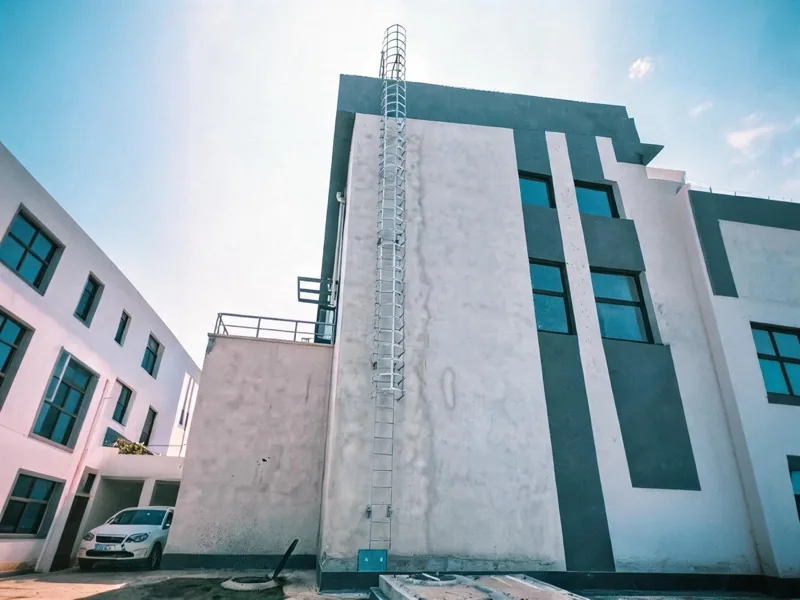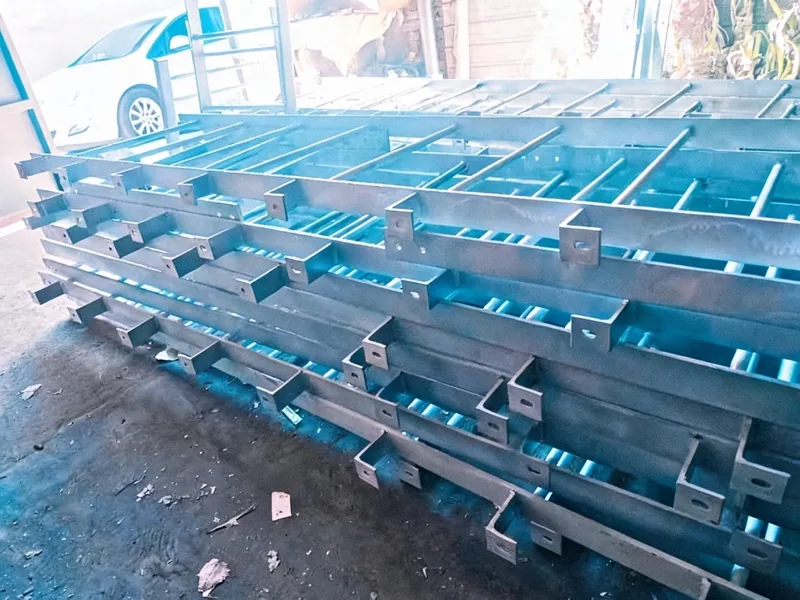
A cat ladder safety inspection is a five-minute habit that prevents a ten-metre fall. Catch a loose anchor bolt or a hairline weld crack on the ground, and it never becomes a coroner's report. This is the exact checklist our quality team runs on every cat ladder before it leaves the line, rewritten so a site crew can follow it without a manual. We are a factory-direct steel ladder maker in Shijiazhuang, ISO 9001:2015 certified since 2003, and every line below maps to OSHA 1910.23 or EN ISO 14122-4.
/images/home_qc_img_inspection.webpWork the list top to bottom. The daily checks are visual and need no tools. The periodic checks need a torque wrench and a coating gauge. Log both. An undocumented inspection counts as no inspection when an auditor shows up.
Why a Cat Ladder Safety Inspection Matters
A cat ladder lives outdoors, bolted to a roof or a wall, taking weather most ladders never see. Rain pools at the anchor plates. UV chalks the coating. Thermal cycling works the bolts loose, one quarter-turn at a time.
OSHA 1910.23 expects fixed ladders to be kept in safe condition and checked for defects. EN ISO 14122-4 sets the same bar in Europe. Neither names a fixed interval, so set yours by exposure: a coastal chemical plant earns a tighter cycle than a dry inland warehouse.
Three failures matter, and they arrive in this order:
- **Corrosion** starts at the welds and anchor plates, where water sits. - **Fastener fatigue** loosens the brackets that tie the ladder to the structure. - **Anti-slip loss** comes last, when worn rungs turn a wet climb into a slip.
In our factory we treat the anchorage as the part most likely to be ignored on site and the most dangerous to get wrong.
Pre-Use Daily Ladder Inspection Checklist
A site user runs this in under five minutes, no tools, before the first climb of the day. This is the ladder inspection checklist we print and laminate for clients.
- [ ] Rungs clear of ice, mud, oil, and bird mess - [ ] No bent, cracked, or missing rungs - [ ] Anchor brackets tight to the wall, no daylight behind the plate - [ ] No rust bleeding from welds or bolt heads - [ ] Anti-slip rung surface still biting, not polished smooth - [ ] Safety hoop or fall-arrest rail undamaged, all fixings present
Fail any line and the ladder comes out of service. Tag it, do not climb it. A two-minute look beats a ten-metre drop.
/images/product_cat-ladders_gallery01_detail.webpPeriodic In-Depth Ladder Inspection Checklist
Twice a year on exposed sites, once a year inland, a competent person runs the deep ladder inspection checklist with tools in hand.
- [ ] Torque-check every anchor bolt to the drawing figure (M12, not "by feel") - [ ] Measure galvanizing thickness with a coating gauge; flag anything under 85 um - [ ] Inspect every weld for hairline cracks, undercut, or porosity - [ ] Confirm rung spacing stays even at 250-300 mm centres - [ ] Load-check the top brackets against the design figure on the drawing - [ ] Check SS304 or SS316 fixings for pitting at ground welds; re-passivate if needed
In our shop we pull-test a sample rung from every batch to failure on our own rig before shipping, so the as-built load stays on file.
Common Defects to Look For
Most cat ladders fail in predictable ways. Know the signatures.
| Defect | What you see | Material | |---|---|---| | Coating breakdown | White rust, then red rust bleeding at edges | Q235B galvanized | | Weld cracking | Hairline line across the weld toe under load | Q235B / SS304 | | Fastener loosening | Movement on a hand-push; bright wear around the bolt | SS304 fixings | | Pitting | Brown tea-staining that does not wipe off | SS304 / SS316 | | Coating wear | Bare metal where loads scrape the stile | hot-dip zinc, under 85 um |
Surface rust on a weld is cosmetic. A crack through the weld toe is not. When the coating reads below roughly 85 um across a wide area, schedule a re-coat, not a touch-up.
Maintenance & Repair Procedures
Repair the small stuff the same day. Replace the ladder when the structure itself is the problem.
Run this short ladder maintenance checklist after every inspection:
- Brush zinc-rich paint over any chip down to bare steel, that day. - Re-torque loose anchor bolts to spec; replace any bolt with thread corrosion rather than re-tightening it. - Wipe salt deposits off stainless with fresh water before staining sets into the grain. - Skip acidic cleaners on galvanized steel; they strip the zinc you are trying to protect.
Replace, do not patch, when a stile is buckled, a weld is cracked through, or corrosion has eaten the section thickness. A roof ladder inspection on a neighbouring unit often reveals the same age-related wear, so check the set, not just the one that failed.
/images/product_cat-ladders_gallery03_crane_work.webpDocumentation & Compliance Records
A maintained ladder you cannot prove is maintained will still fail an audit. To meet OSHA ladder inspection requirements, every check needs a dated record: who looked, what they found, what they fixed, and the torque and coating readings they took.
Keep these on file beside the documents that shipped with the ladder:
- Material certificates for the Q235B, SS304, or SS316 stock - Weld inspection reports - Load-test data from the batch pull-test - Coating-thickness readings, dated and signed
Every order we ship carries its material certificates, weld reports, and load-test data. Third-party proof is available too: SGS, TUV, or Bureau Veritas witnessed testing on request. Buying factory-direct means no middleman sits between you and the paperwork, and clients are welcome to audit the factory in person.
For the wider picture, read our [cat ladder safety guide](/blog/cat-ladder-safety/), compare [aluminium vs steel cat ladders](/blog/cat-ladder-aluminium-vs-steel/), see [what a roof cat ladder is](/blog/roof-cat-ladder-what-is/), or spec a unit on the [roof cat ladder product page](/products/roof-cat-ladder/). New buyers can start with the [roof cat ladder buying guide](/roof-cat-ladder-buying-guide/).