Cat ladder vs fixed roof ladder is the first call most buyers get wrong, because the two solve different halves of the same job. A cat ladder lies on the roof and lets you walk up the slope. A fixed roof ladder stands at the wall and gets you up to the roof. We weld both every week, so this is the factory-floor read, not a catalog blurb.
This is a straight comparison. We define each ladder, put their steel, safety codes, and cost side by side, then give a clear verdict. If you only need the wider picture first, start with our roof ladder buying guide, then come back to weigh the two below.
- Cat ladder: best for moving across or up a pitched roof to a ridge, valley, or rooftop plant.
- Fixed roof ladder: best for the vertical climb up to the roof from the ground, a wall, or a parapet.
- Governed by: OSHA 1910.23 and EN ISO 14122-4, with cage and fall-arrest thresholds that differ by height.
What's the Difference: Cat Ladder vs Fixed Roof Ladder
The names get mixed up on site, so pin the geometry first. The two are not interchangeable.
What a Cat Ladder Is
A cat ladder roof system lies flat on the slope and follows the pitch. It spreads a climber's weight across the roof skin and usually hooks over the ridge or bolts to brackets. Tiles and standing-seam metal both crack under a boot, so the cat ladder is what stops that. Picture roof maintenance, solar work, or chimney access on a pitched roof. See the build on our Roof Cat Ladder page.
What a Fixed Roof Ladder Is
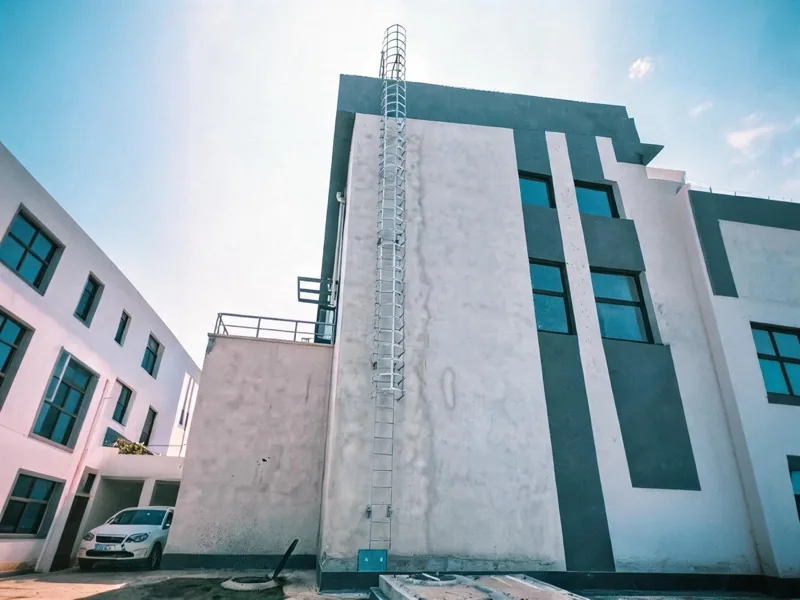
A fixed roof ladder, also sold as a fixed roof access ladder, is the near-vertical climb that takes you up to the roof in the first place. It bolts to a wall, parapet, or steel frame at roughly 75 to 90 degrees. This is the product OSHA and EN size with rung spacing, side clearance, and cage or fall-arrest rules. The detail sits on our Fixed Roof Access Ladder page.
So the honest answer to cat ladder vs fixed roof ladder is often "both." You climb the fixed ladder to reach the roof, then crawl the cat ladder across the slope. In our factory, we ask one question first: are you getting onto the roof or moving along it?
Design and Materials Compared
Steel is where the comparison gets concrete. Same factory, two builds.
Grades and Coating
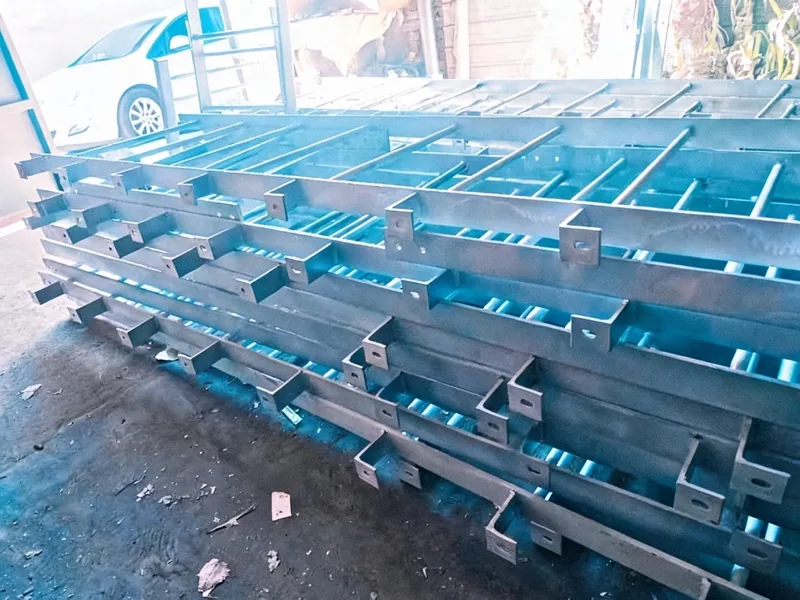
We build both in Q235B for painted or hot-dip galvanized work, and switch to SS304 or SS316 for coastal salt or chemical washdown. Galvanizing on our line is applied. A cat ladder usually carries a lighter section, since the roof shares the load. A fixed roof ladder carries a stiffer stile, because every rung load runs straight into the anchors.
Dimensions and Load
Rung spacing on the fixed climb follows code at 250–300 mm. Cat ladder tread spacing is set to a comfortable stride up the slope. Every batch is sample-tested for rung tensile before it ships. For the wider sizing logic, read our roof ladder dimensions guide.

Safety and Compliance: OSHA 1910.23 vs EN ISO 14122-4
This is the part that fails an audit if you guess. The two ladders answer to the code in different ways.
The Fixed Roof Ladder Rules
The vertical climb is the one with the strict geometry. OSHA 1910.23 drives the cage or fall-arrest decision by height, and EN ISO 14122-4 sets pitch, rung diameter, and side clearance. Past the threshold, you fit a cage or a fall-arrest rail, not a guess. The full breakdown lives in our OSHA 1910.23 requirements and fall protection guides.
The Cat Ladder Rules
A cat ladder is judged on anchorage and grip on the slope, not on cage thresholds. The risk is sliding, so the focus shifts to roof fixings, edge protection, and how the ladder ties to the ridge. Our roof ladder safety guide walks the checklist. As an ISO 9001:2015 maker shipping to 50+ countries, we send a third-party load report with both products, so the paperwork survives inspection.
Cost, Installation and Use Cases: Fixed Ladder vs Cat Ladder
Weigh fixed ladder vs cat ladder on three plain factors: what you pay, how it goes in, and the job it does.
Cost
The fixed roof ladder usually costs more per meter. It carries a heavier section, code geometry, and often a cage or rail. The cat ladder is lighter, but length and bracket count drive its price. We break the drivers down in the roof ladder cost guide.
Installation
A fixed roof ladder needs a fixing survey and the right anchors for masonry, steel, or wall. A cat ladder needs sound roof fixings and a ridge hook or bracket line that will not work loose. Done wrong, either one is a fall waiting to happen.
Use Cases
On a recent export job, the building needed both: fixed access ladders up the wall and cat ladders across a pitched plant-room roof. That pairing is common. When in doubt, we draw both and let the site decide.
Side-by-Side Cat Ladder Comparison Table
This cat ladder comparison table puts the two builds against each other. Code ranges follow OSHA 1910.23 and EN ISO 14122-4; our product specifics are flagged.
| Attribute | Cat Ladder | Fixed Roof Ladder |
|---|---|---|
| Orientation | Lies on the roof slope | Near-vertical, 75°–90° |
| Job | Move along / up the roof | Climb up to the roof |
| Mounting | Ridge hook / roof brackets | Wall, parapet, or steel frame |
| Material | Q235B / SS304 / SS316 | Q235B / SS304 / SS316 |
| Working load | — | — |
| Coating | Galvanized | Galvanized |
| Rung / tread spacing | — | 250–300 mm |
| Code basis | Roof anchorage + edge protection | OSHA 1910.23, EN ISO 14122-4 |
| Cage / fall-arrest | Edge protection, not a cage | Cage or rail above height threshold |
| Best for | Pitched-roof maintenance, solar, chimney | Permanent vertical roof access |
| Relative cost | Lower per meter | Higher per meter |
Which One Should You Choose
Match the ladder to the move, not the budget. The choice is usually quick once the geometry is clear.
- Choose a cat ladder when the work is on a pitched roof and the slope needs protecting from boots.
- Choose a fixed roof ladder when the climb is the problem and the access must answer to OSHA 1910.23 or EN ISO 14122-4.
- Choose both when crews climb up and then move across — the most common real-world case.
Buying factory-direct keeps it simple: no middleman, no markup, and we ship material certificates, weld reports, and load-test data in the box. Factory audits are welcome. Send your roof pitch, height, and the standard you answer to, and we return a drawing, a load rating, and the test paperwork. Send your spec and we quote it straight, or read the roof ladder buying guide first.