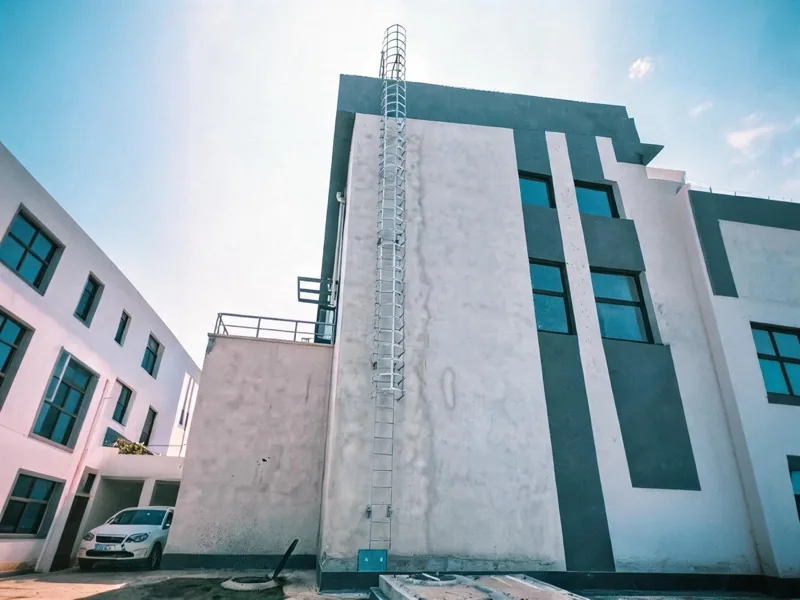
A fall from a fixed ladder is rarely survivable above a few metres. That is why fixed ladder fall protection is no longer optional on tall climbs. We weld these systems every week at our 8,000 m² Shijiazhuang factory. This guide compares the four real options — cage, vertical cable, rigid rail, and personal fall arrest — and shows where each one fits.
The rules tightened in 2018, and a hard deadline lands in 2036. Pick the wrong system and you fail an audit. Pick the right one and the ladder passes on the first visit.
Why Fixed Ladders Need Fall Protection
Height is the trigger. A short ladder carries its own safety case. A tall one does not.
Under OSHA, the line sits at 24 ft (7.3 m) measured to the next landing. Above it, the side rails alone are not enough — the worker needs a system that arrests a fall. Most industrial falls happen on the climb, not at the top.
Three forces drive every order we see:
- Exposure — tanks, silos, and roof access often run 8 to 20 m.
- Regulation — OSHA 1910.28 and EN ISO 14122-4 both demand protection above set heights.
- Liability — an unprotected ladder is the first thing an auditor flags.
Engineer's note: we ask for the climb height before anything else. It decides the system, the anchor load, and the cost.
OSHA 1910.28 Fall Protection Requirements
OSHA splits the duty across two rules. Construction detail sits in 1910.23(d). Fall protection sits in 1910.28(b)(9), with system specs in 1910.140.
The 24 ft trigger is the one to remember. Above it, a new ladder needs a personal fall arrest system or a ladder safety system. A cage on its own no longer counts.
Two dates frame OSHA fixed ladder fall protection:
- 19 November 2018 — new ladders over 24 ft can no longer use a cage as fall protection.
- 18 November 2036 — every existing ladder over 24 ft must convert to PFAS or a climbing-rail system.
For the clause-by-clause read, see our guide to OSHA 1910.23 fixed ladder requirements. Anchorages must hold 5,000 lbf (22.2 kN) per worker, or be engineered to a safety factor of two.
Types of Fall Protection Systems for Ladders
Four systems do the real work. Each suits a different height, budget, and site.
| System | How it works | Best for | OSHA status (new ladders) |
|---|---|---|---|
| Cage or well | Hoops ring the climber | Existing ladders only | Not accepted alone since 2018 |
| Vertical cable | Tensioned cable with a sliding sleeve | Long runs, retrofits | Accepted |
| Rigid rail | Steel rail with a locking carriage | High-use, heavy industry | Accepted |
| PFAS + SRL | Harness, lanyard or self-retracting lifeline, anchor | Short or mixed-task climbs | Accepted |
The cage is the old default. It still helps on existing assets, yet it no longer satisfies OSHA on its own for new builds. A vertical cable or rigid rail tracks the climber and locks on a fall.
A self-retracting lifeline suits short, mixed-task climbs. The line pays out as you move and locks under shock load. For permanent vertical access, a rail or cable usually wins on the long run.
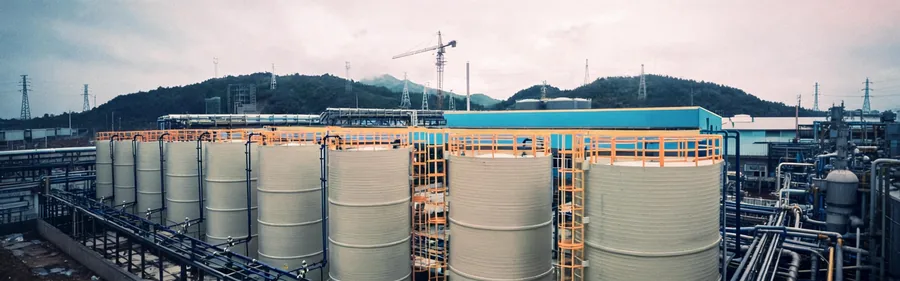
We build all four. Compare our fixed ladder safety system against the vertical fixed access ladder and caged ladder ranges.
EN ISO 14122-4: Fall Protection on Fixed Ladders
Exporting to Europe? The matching code is EN ISO 14122-4. It sets a different path from OSHA, though the goal is the same.
EN ISO 14122-4 still allows guard hoops, or a cage, on permanent ladders. It pairs them with rest platforms that break a long climb into shorter sections. The standard caps rung pitch at 300 mm and sets clear width between 400 and 600 mm.
The UK adds BS 4211 for permanently fixed ladders, which sets out hoop spacing and landing detail. For fall protection on fixed ladders sold into the EU, we build to EN ISO 14122-4 and certify to it.
One well-built ladder often satisfies both OSHA and EN. We design to the stricter clause where the two differ.
Choosing and Installing the Right Ladder Fall Protection System
Specification comes down to four numbers and one material call.
- Climb height — under 24 ft may need no system; above it, a rail, cable, or PFAS is mandatory.
- Anchor load — each anchorage holds 22.2 kN per worker, or runs to a safety factor of two.
- Arrest force — the system caps force on the body at 8 kN (1,800 lbf).
- Coating — hot-dip galvanizing at 70 to 85 µm as standard.
Material is where factory choice shows. We cut side rails and climbing rails from Q235B structural steel for most jobs. For washdown or coastal sites we switch to SS304, or SS316 where chlorides run high.
Installation matters as much as the part. A rail carries the fall load into the structure, not just into the ladder. We size and stamp every anchor bracket on the drawing. Get the anchorage wrong and the harness is decoration.

Inspection and Compliance
A system is only as good as its last inspection. OSHA wants a check before the first use of each shift, and again after any event that could affect the ladder.
A compliant walk-round covers:
- Rails, rungs, and the safety carriage for free travel and damage.
- Cable tension, sleeve lock, and anchor bolts for tightness.
- Cage hoops, where fitted, for corrosion or bends.
- Coating wear that exposes bare steel.
Compliance starts before the ladder ships. Every batch is sample-pulled for weld strength on a tensile rig, not just eyeballed. Each order leaves with material certificates, weld reports, and load-test data — the paperwork an inspector asks for. Need a service eye on site? Our inspection and service fixed ladder line is built around it.
The factory holds ISO 9001:2015. Third-party inspection by SGS, TÜV, or Bureau Veritas is available on request, and we have shipped to 50+ countries since 2003. Buying direct means no middleman markup — you talk to the engineers who weld the ladder. Buyers are welcome to audit the plant in person.
One job from our records: an offshore wind contractor in the Netherlands ordered vertical rigid-rail fixed ladders for turbine access towers. We supplied SS316 throughout for salt-spray resistance, with batch load-test reports and weld certificates. The site cleared its local fall-protection audit on the first visit.
Spec'ing a fixed ladder? Send the height, the standard, and your preferred system. We return a drawing, a load rating, and a factory-direct quote. Talk to our engineers, or start with our pillar guide on what a fixed ladder is.