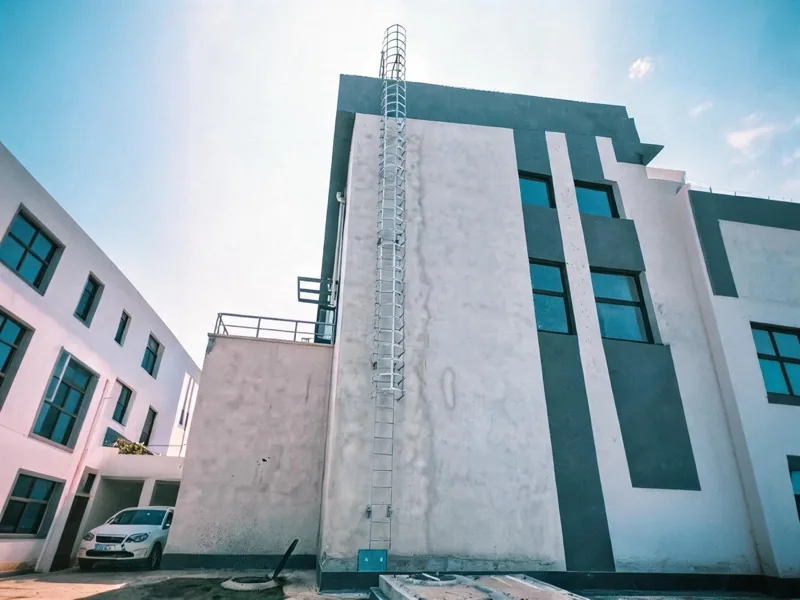
A fixed ladder inspection is the cheapest fall-protection insurance a plant can buy. Catch a cracked weld on the ground, not under a climber. This is the point-by-point routine our QC engineers run before any unit leaves our 8,000 m² Shijiazhuang factory, and the one we hand clients for in-service checks. Every line below maps to OSHA 1910.23, EN ISO 14122-4 or BS 4211. We have built steel access to these codes since 2003, ISO 9001:2015 certified throughout.
Work the list in order. Daily checks are visual and take minutes. The annual check is a competent-person job with tools. Record both — an undocumented inspection counts as no inspection.
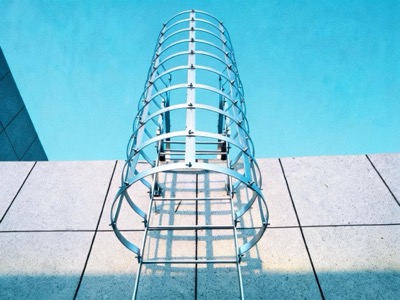
1. Pre-Use & Daily Visual Checks: The Fixed Ladder Inspection Checklist
A site user runs these in under five minutes, no tools needed. Anything that fails takes the ladder out of service. Tag it, do not climb it.
- ☐ Rungs clear of ice, mud, oil and debris.
- ☐ No bent, cracked or missing rungs; anti-slip surface still biting.
- ☐ Side rails free of cracks at the welds; no rust bleeding through the coating.
- ☐ Anchor brackets tight to the wall, no daylight behind the plate.
- ☐ Cage hoops undamaged, every bolt present.
- ☐ Walk-through rails still extend above the landing.
A two-minute look beats a ten-metre drop. Our crews tag any failure the moment they spot it.
2. Periodic & Annual Inspection Checklist
Once a year the unit needs a deeper check by a competent person. Bring a torque wrench and a coating gauge.
- ☐ Torque-check every anchor bolt to spec; look for elongated holes.
- ☐ Measure coating thickness — we hot-dip galvanize to 70–85 µm.
- ☐ Proof-load a sample rung; in our factory we test to a 1.5 kN point load before shipment.
- ☐ Check rung pitch holds 300 mm end to end.
- ☐ Confirm cage hoop spacing stays within 1,200 mm.
We pull a sample from each batch and document the result. That is the habit that keeps field failures near zero.
3. OSHA 1910.23 & EN ISO 14122-4: Fixed Ladder Inspection Requirements
This is where pass-or-fail lives. Measure against the code, not by eye. For US sites, this doubles as the fixed ladder inspection OSHA 1910.23 expects on record.
- ☐ Rung spacing uniform and no more than 300 mm (12 in).
- ☐ Side rails extend 1,070 mm (42 in) above the landing.
- ☐ Climbing-side clearance at least 175 mm (7 in) to the wall.
- ☐ Over 7.3 m (24 ft): personal fall-arrest or a cage on legacy units, per the 1910.28 phase-out.
- ☐ EN ISO 14122-4 back-guard and rest-platform spacing met for export units.
Read the full clause-by-clause breakdown in our OSHA 1910.23 fixed ladder requirements guide and the EN ISO 14122-4 standard explainer.
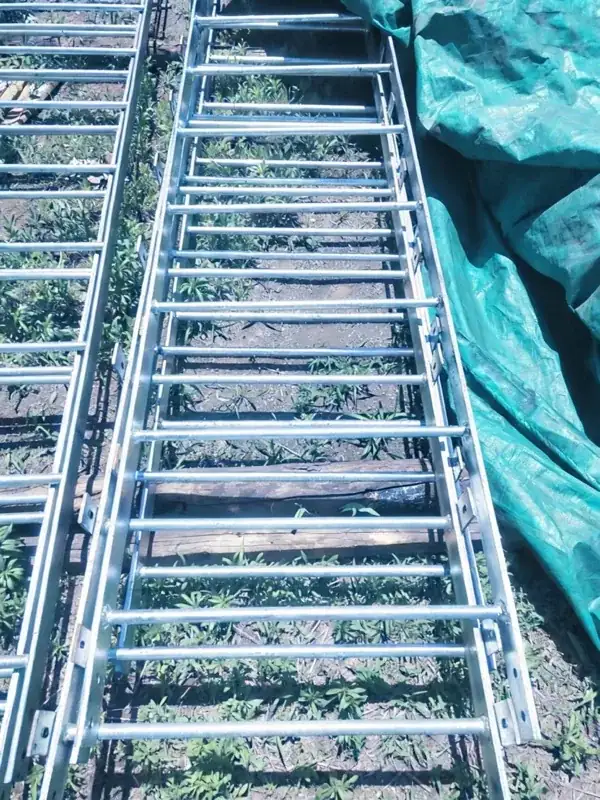
4. Rung, Rail, Cage & Anchor: Corrosion & Weld Integrity Checks
Steel fails at two places: the welds and the coating breaks. Look there first.
- ☐ Inspect weld toes for hairline cracks, especially rung-to-rail joints.
- ☐ Probe rust at coating chips; surface bloom is fine, section loss is not.
- ☐ On SS304 or SS316 units, check for tea-staining and dissimilar-metal contact.
- ☐ Test anchors for movement under load; a loose plate spreads stress to the welds.
- ☐ Confirm the base material grade matches the cert — Q235B for galvanized, SS304/SS316 for marine air.
An engineer's habit: tap suspect welds and listen. A dull note often means a crack under the paint.
5. Documentation & Inspection Records
An auditor trusts paper, not promises. Keep a file for each ladder.
- ☐ Material certificates for the Q235B, SS304 or SS316 stock.
- ☐ Weld reports and welder qualifications.
- ☐ Load-test data from the proof check.
- ☐ A dated inspection log with the inspector's name and findings.
Buying factory-direct means no middleman holds these back. We ship every order with the full document pack, and third-party inspection by SGS or Bureau Veritas is available on request. The same records have cleared first-visit safety audits across 50+ countries. Factory audits are welcome on site.
One example, anonymised: a food-processing client ordered caged tank-access ladders and cleared their first third-party audit with zero non-conformances.
6. Signs of Failure: When to Repair vs Replace
Some defects you fix on site. Others end the ladder's service life. Use this rule of thumb.
- ☐ Surface rust, intact section — clean and recoat.
- ☐ Loose or elongated bolt holes — re-engineer the anchor, do not just retighten.
- ☐ Bent cage hoop or deformed rung — replace the affected section.
- ☐ Cracked weld or section loss — take it out of service and replace.
When repair is not worth it, talk to the people who built it. Send your height and standard, and we return a drawing, a load rating and an inspection plan with the quote. For ongoing cover, see our inspection and service for fixed ladders and the fixed ladder safety system. New build? Start with our fixed ladder basics and specifications guides.