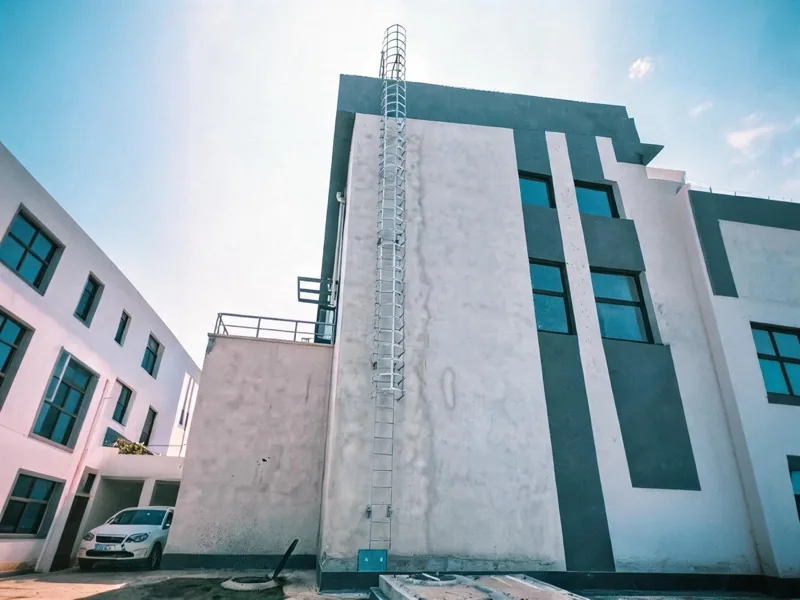
An aluminium cat ladder and a Q235B steel cat ladder do the same job in very different metal. One is light and quick to retrofit. The other is heavy, stiff, and built to stay. We weld both on our line, so this cat ladder comparison is the factory-floor read, not a brochure.
This is a material-first comparison. We put 6061-T6 aluminium, Q235B mild steel, and SS304 stainless side by side, then weigh load, corrosion, weight, and code. Want the wider picture first? Start with our roof ladder buying guide. For a different split, read cat ladder vs fixed roof ladder.
- Aluminium cat ladder: light, corrosion-resistant, fast to retrofit on an existing roof.
- Steel cat ladder: stiff, low cost per meter, built for permanent industrial fixing.
- Governed by: OSHA 1910.23, EN ISO 14122-4, and BS 4211, with rung load tested per material.
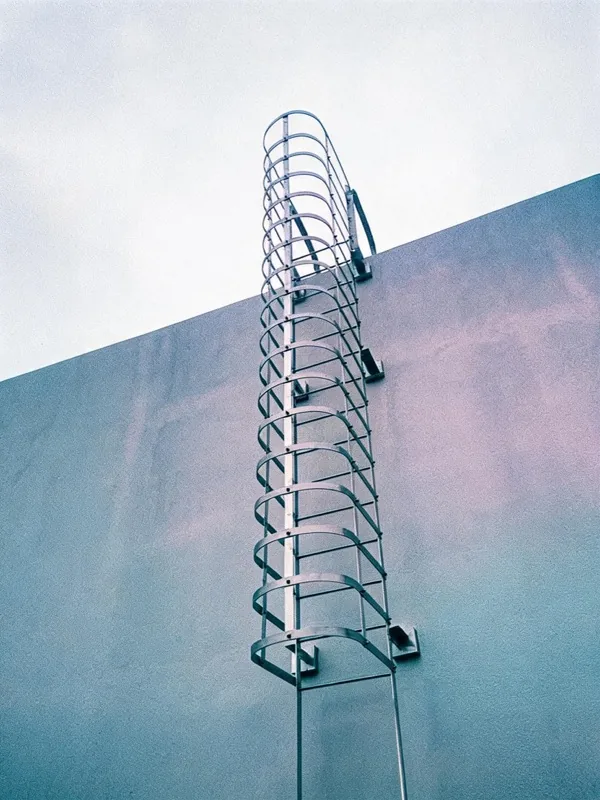
Material Properties at a Glance
Start with the metal itself. This cat ladder comparison table sets 6061-T6 aluminium against Q235B steel and SS304 stainless. The figures are standard material values; our product specifics are flagged.
| Property | 6061-T6 Aluminium | Q235B Mild Steel | SS304 Stainless |
|---|---|---|---|
| Density | ~2.70 g/cm³ | ~7.85 g/cm³ | ~8.0 g/cm³ |
| Yield strength | ~240 MPa | 235 MPa | ~205 MPa |
| Tensile strength | ~290 MPa | 370–500 MPa | ~515 MPa |
| Stiffness (E) | ~69 GPa | ~210 GPa | ~193 GPa |
| Corrosion resistance | High (oxide skin) | Low (needs coating) | Very high |
| Relative weight | Lightest | ~2.9× aluminium | ~3× aluminium |
| Typical finish | Anodized / mill | Hot-dip galvanized | Bare / pickled |
| Relative cost | Higher | Lowest | Highest |
Two numbers settle most jobs. Aluminium weighs about a third of steel. Steel costs less per meter and carries far higher rung loads before it bends.
Load & Strength Compared: Steel Cat Ladder vs Aluminium
Yield strength tells you where a metal bends for good. Q235B yields at 235 MPa. A 6061-T6 aluminium cat ladder yields near 240 MPa, almost level on paper.
Stiffness is the real gap. Steel is roughly three times stiffer than aluminium, near 210 GPa against 69 GPa. Under the same rung load, an aluminium stile flexes more, so we run a thicker section to hold deflection in check. A steel cat ladder reaches the same stiffness with less metal.
Code sets the floor. OSHA 1910.23 asks each rung to carry at least 250 lbf, about 1.1 kN, as a single concentrated load. EN ISO 14122-4 sets its own design loads and deflection limits. Every batch is sample-tested for rung tensile before it ships.
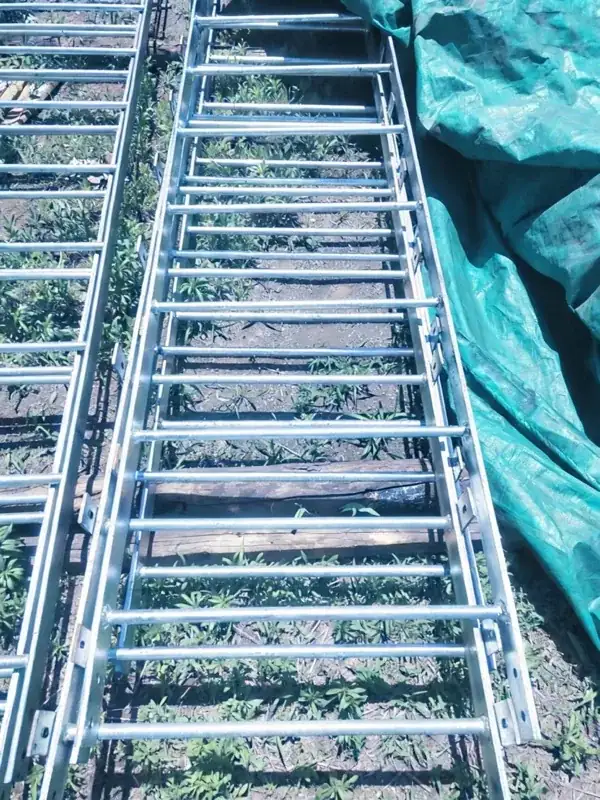
Corrosion & Coating: Stainless Steel Cat Ladder Options
Here the metals split hard. Aluminium grows its own oxide skin, so an aluminium cat ladder shrugs off rain and mild salt with no paint. Anodizing thickens that layer for harsher sites.
A mild steel cat ladder is different. Bare Q235B rusts, so it needs a coat. We hot-dip galvanize to ISO 1461, which buys decades on most roofs. For coastal salt or chemical washdown, a metal cat ladder in plain steel is the wrong call. There we build a stainless steel cat ladder in SS304, or step up to SS316 where chlorides bite hardest.
- Inland, dry roof: galvanized Q235B steel or mill-finish aluminium both last well.
- Marine or coastal: SS304 stainless, or anodized aluminium for a lighter build.
- Chemical plant: SS316 stainless, with weld reports to match.
Weight, Handling & Installation
Weight changes the whole install. An aluminum cat ladder is light enough for two people to carry up a scaffold and clip into place in a morning. That makes it the easy pick for a retrofit on an occupied building.
Steel asks for more. A steel cat ladder is heavier to lift and usually wants lifting gear on a tall run, but it bolts down as a permanent fixture and barely moves once set. Rung spacing on both follows code at 250–300 mm. Stringer depth and ladder width are sized to the load and the standard you answer to.
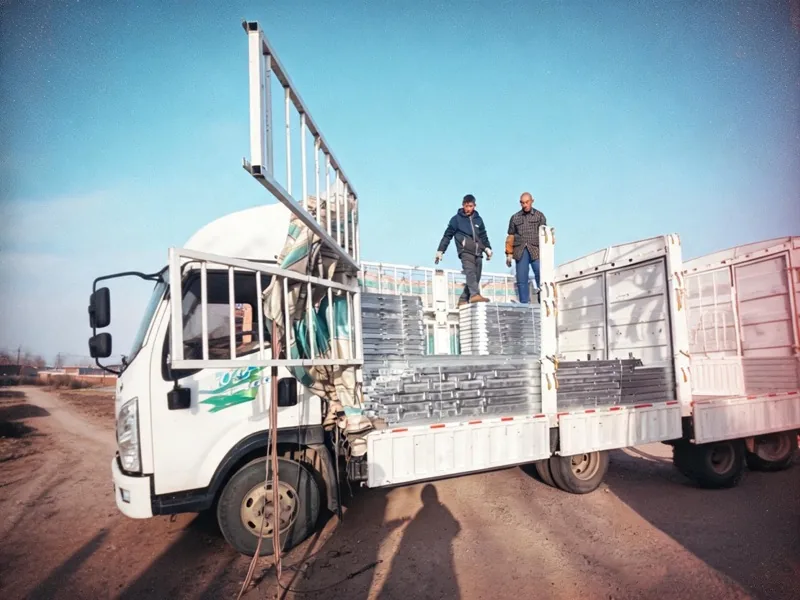
Standards & Compliance: OSHA 1910.23, EN ISO 14122-4, BS 4211
Code does not care about your metal until it is tested. The same rules cover both an aluminium cat ladder and a steel one, but each material is verified on its own.
OSHA 1910.23 governs US fixed-ladder geometry and rung strength. EN ISO 14122-4 sets the European design loads, pitch, and clearances. In the UK, BS 4211 adds its own access-ladder rules. We run load tests per material, because aluminium and steel deflect differently under the same boot. As an ISO 9001:2015 maker shipping to 50+ countries, we send a third-party load report with every order.
Which to Choose: Decision Matrix + Factory-Direct
Match the metal to the job, not the brochure. This decision matrix is how we steer buyers on the phone.
| Your situation | Best metal | Why |
|---|---|---|
| Rooftop retrofit, frequent carrying | 6061-T6 aluminium | Light, fast to fit, no paint upkeep |
| Permanent industrial access, budget-led | Q235B galvanized steel | Cheapest per meter, very stiff |
| Coastal or marine site | SS304 stainless | Beats salt without coatings |
| Chemical or washdown plant | SS316 stainless | Holds up to chlorides and acids |
| Mixed site, both jobs | Steel base + aluminium runs | Strength where fixed, light where carried |
One field example shows the trade-off. Salt air ruled out plain steel, so we shipped SS304 cat ladders with full material certificates. The buyer skipped the rust callbacks.
Buying factory-direct keeps it clean. No middleman, no markup, and material certificates, weld reports, and load-test data ship in the box. Factory audits are welcome any week. Send your roof pitch, height, and the standard you answer to, and we return a drawing, a load rating, and the test paperwork. Send your spec for a straight quote, see the roof cat ladder product page, or check roof ladder safety before you fit.