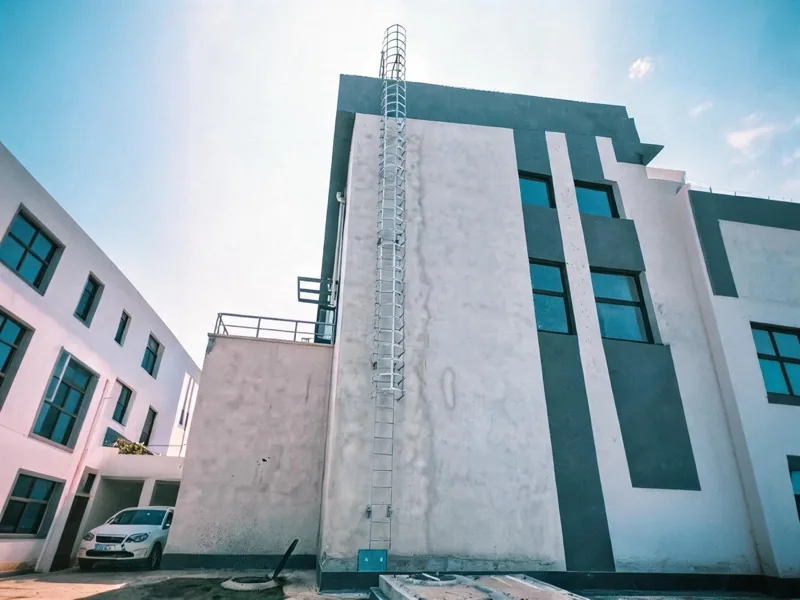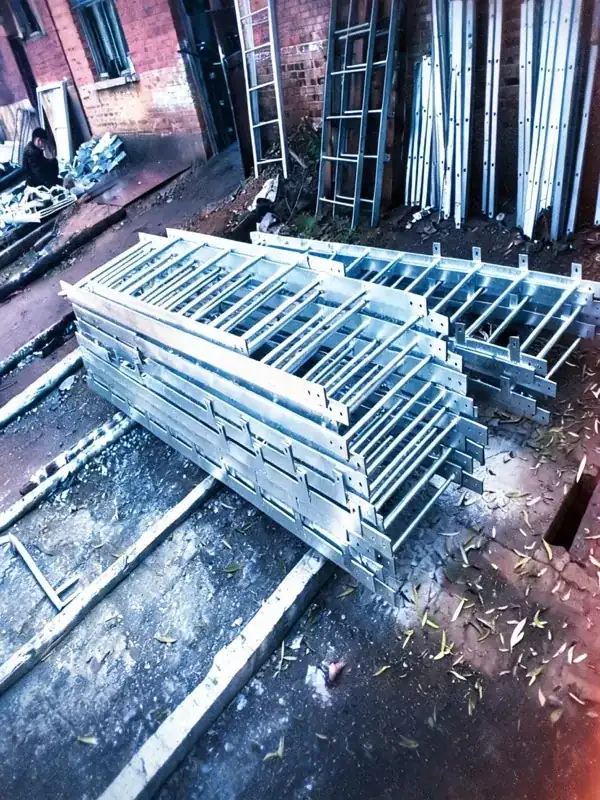
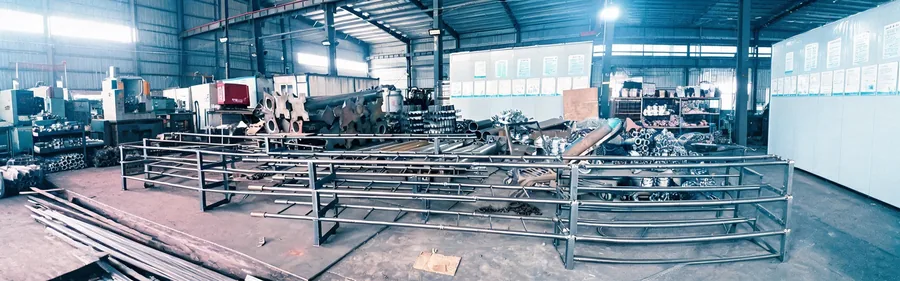
Fixed ladder pros and cons sit on two sides of one trade. You gain permanent, code-built access in welded steel. You pay upfront, you bolt it down, and you inspect it on a schedule. We weld these ladders every week, so this is the factory-floor version, not a brochure.
This reads as a straight comparison. Pros first, then cons, then a side-by-side table against stairs and platform ladders. If a fixed ladder is wrong for your building, we will say so. New to the product? Start with what a fixed ladder is, then weigh the list below.
- Best for: permanent, daily, or audited roof and machinery access.
- Skip it for: rare, low, one-off work a portable ladder covers.
- Governed by: OSHA 1910.23, EN ISO 14122-4, and BS 4211.
Pros of Fixed Ladders: The Advantages
Five advantages carry most fixed ladder decisions. Here is each one in steel, not adjectives.
1. Durability in Q235B or Stainless
A fixed ladder is welded steel, not a folding store ladder. We build stiles and rungs in Q235B for painted or hot-dip galvanized work. For coastal salt or chemical washdown, we switch to SS304 or SS316. Galvanizing on our line is applied. That coat shrugs off years of weather. In our factory, we steer outdoor buyers to galvanizing over paint. Paint chips at the bolt holes first, and rust starts right there.
2. Permanent, Repeatable Safe Access
The ladder is bolted in place and ready every shift. No setup, no leaning, no guesswork on angle. Rung spacing and side clearance are fixed by the drawing. Working load is rated per our load tables. See the numbers in our fixed ladder weight capacity guide.
3. OSHA and EN Compliance Built In
This is the strongest argument for the product. Built to OSHA 1910.23, EN ISO 14122-4, or BS 4211, the geometry is defined, not improvised. Cage or fall-arrest thresholds, rung diameter, and pitch all follow the code. The full rule set lives in our OSHA 1910.23 requirements article.
4. Custom Build to the Millimeter
Buildings are rarely standard. We cut the ladder to your height, offset, and landing in millimeters. Need a walkthrough handrail or a self-closing gate at the top? That is a drawing change, not a roadblock. Every batch is sample-tested for rung tensile and load before it ships.
5. Factory-Direct Supply and Paperwork
Buying from the factory means no middleman markup. As an ISO 9001:2015 maker shipping to 50+ countries, we send material certificates, weld reports, and load-test data with every order. On a recent export job, a third-party inspector signed the rung load test before containers shipped. You are welcome to audit the factory yourself.
Cons of Fixed Ladders: The Disadvantages
No honest comparison hides the downsides. Three are worth planning for.
1. Higher Upfront Cost
A code-built steel ladder costs more upfront than a portable one. You pay for steel, welding, coating, and certification. The payback is lifespan and passing the audit. We break down the drivers in the fixed ladder cost guide.
2. Fixed Installation
The ladder must be anchored to masonry, steel, or a structural wall. That means a fixing survey and the right anchors for the substrate. It is not a five-minute job. Done wrong, even the strongest ladder is unsafe. Our installation guide covers anchor selection and torque.
3. Periodic Inspection
Steel outdoors needs a light routine. Check welds, anchors, and coating once a year, and touch up scratches. It is modest, not zero. Skip it near the coast for a decade and even SS304 will tea-stain. A fixed ladder safety system with a fall-arrest rail also needs its own inspection log.
Fixed Ladder vs Stairs vs Platform Ladder
Same job, three tools. This table weighs a fixed ladder against stairs and a platform ladder. Ranges follow OSHA 1910.23 and EN ISO 14122; our product specifics are flagged.
| Attribute | Fixed Ladder | Stairs | Platform Ladder |
|---|---|---|---|
| Footprint | Smallest, vertical | Largest | Medium, mobile |
| Permanent install | Yes, anchored | Yes | No, portable |
| Material | Q235B / SS304 / SS316 | Steel / concrete | Aluminum / steel |
| Pitch | 75°–90° | 30°–45° | Stepped + platform |
| Step / rung spacing | 250–300 mm | ~150–220 mm riser | ~250 mm |
| Working load | — | Higher, distributed | ~150 kg rated |
| Coating | Galvanized | Paint / galv. | Anodized / paint |
| Code basis | OSHA 1910.23, EN ISO 14122-4 | OSHA 1910.25, EN ISO 14122-3 | EN 131 |
| Best for | Tight, vertical, daily access | Two-way traffic, loads | Mobile maintenance |
| Relative cost | Medium | Highest | Lowest |
Fixed ladder vs stairs: stairs win on comfort and carrying loads. They also eat floor space and cost the most. A fixed ladder wins where space is tight and the climb runs a few times a shift. For tall enclosed climbs, pair it with a fall-arrest safety system. Want something portable instead? Read our fixed ladder alternatives.

When a Fixed Ladder Is the Right Choice
Run your access point through this checklist. More boxes ticked, the stronger the case.
- Access is permanent and used on a routine, not one-off.
- Floor or wall space is tight, so stairs do not fit.
- The climb must answer to OSHA 1910.23 or EN ISO 14122-4.
- You need documented load ratings for an audit.
- The site is harsh: outdoor, coastal, or washdown.
If three or more apply, a fixed ladder is usually the right call. For a wall mounted fixed ladder, confirm the wall substrate first. Still unsure between products? Compare them in our alternatives guide, or read what a fixed ladder is.
The Verdict: How to Order Factory-Direct
For permanent, repeated access on a commercial or industrial building, the pros outweigh the cons. The cost, install effort, and inspection are predictable, not hidden. For low, rare access, a portable ladder is enough.
Ordering factory-direct is short:
- Send your height, offset, landing detail, and the standard you answer to.
- We return a drawing, a load rating, and the test paperwork.
- Approve the drawing. We weld, galvanize, and sample-test the batch.
- We ship with material certificates, weld reports, and load-test data in the box.
No middleman, no markup, and factory audits are welcome. Send your spec and we quote it straight.