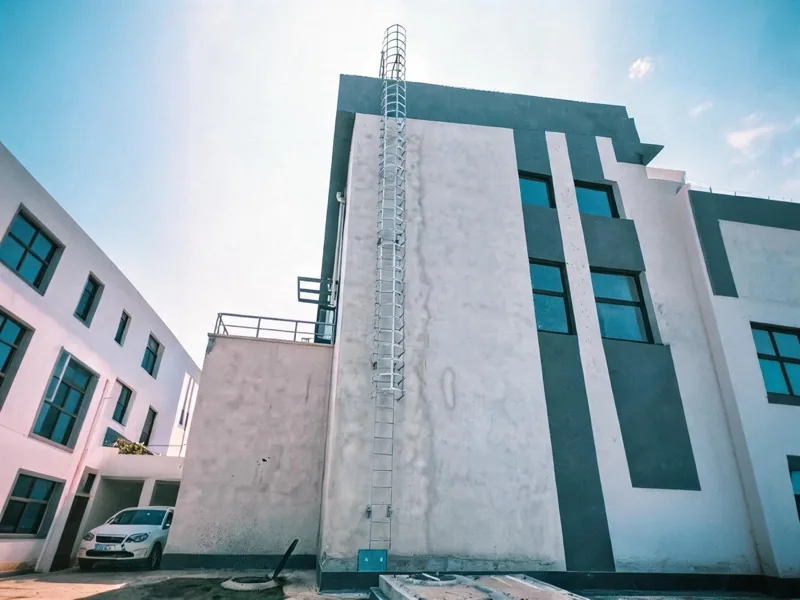
Fixed ladder requirements change the moment you cross a border. A ladder cleared for a UK site is not automatically signed off in Australia or India. We export to all three, so we read three codes — BS 4211, AS 1657, and IS 3696 — before a drawing leaves our 8,000 m² Shijiazhuang factory.
This guide lines them up. What each code is for, where the numbers differ, and how one well-built ladder can satisfy more than one market. Where a figure is edition-specific, we flag it rather than guess.
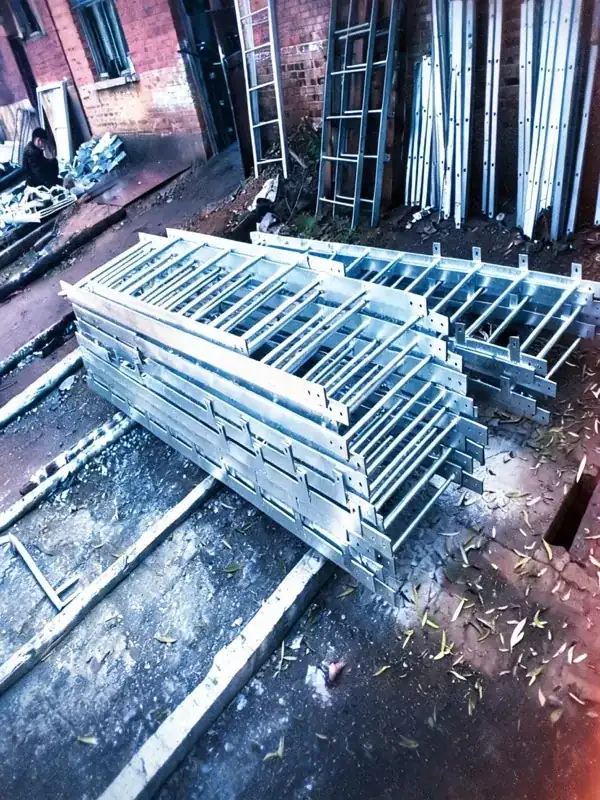
BS 4211 — UK Fixed Ladder Requirements
BS 4211 is the British standard for permanently fixed ladders. The current edition is BS 4211:2005+A1:2008. It covers ladder construction, rest platforms, and the safety hoops or fall-arrest that protect a tall climb.
In the UK the picture has two layers. BS 4211 sits alongside BS EN ISO 14122-4, the harmonised machinery-access code. Many buyers specify both. Our guide to EN ISO 14122-4 fixed ladders covers that overlap in detail.
The geometry follows a familiar pattern. Rung pitch runs in a 250–300 mm band. A safety cage or fall-arrest line is triggered above a set height. We set a uniform 300 mm pitch as standard and rate the fall-protection method on the drawing.
AS 1657 — Australian Fixed Ladder Requirements
AS 1657 is the Australian code for fixed platforms, walkways, stairways and ladders. The current edition is AS 1657:2018. It is widely cited as AS/NZS 1657 in tender documents across the region.
Australian fixed ladder requirements lean hard on rest platforms and fall protection. A long vertical run is broken by landings so no single flight runs too far. Rung pitch sits in the 250–300 mm range.
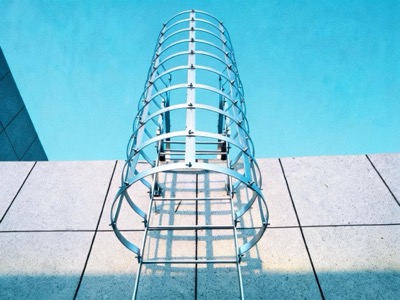
Cages are treated as one option, not the default. Where a cage is fitted, hoop spacing and standoff are set by the code. For new tall ladders we usually pair the ladder with a fixed ladder safety system rather than a cage alone.
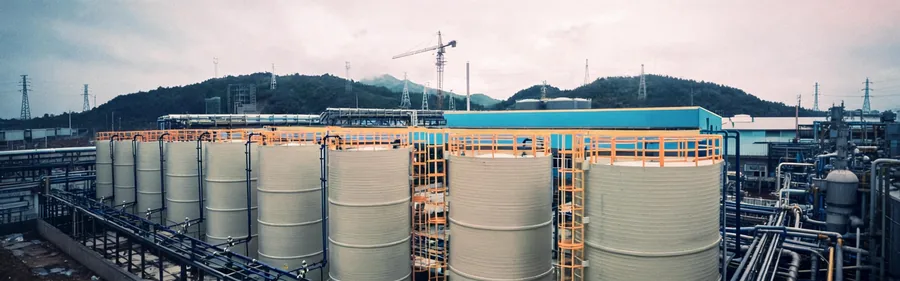
IS 3696 — Indian Fixed Ladder Requirements
IS 3696 is the Indian safety code for scaffolds and ladders. Part 2 deals with ladders. It is a safety code first, so it reads more as duty-of-care than a tight dimensional spec.
For fixed ladders it sets out sound construction, secure fixing, and guarding for height. Exact rung and clearance figures are edition-specific. Indian buyers exporting plant often ask us to build to IS 3696 and OSHA together, since end clients vary.
Our take is simple. Build the steelwork to the tighter of the two codes on the table, and the ladder clears both. The same logic runs through our OSHA 1910.23 guide.
UK vs Australia vs India: Side by Side
Here is the short version. The table contrasts the three codes on the figures buyers ask about most, with our factory build standard in the last column. Cells marked need a check against the current edition before we stamp a drawing.
| Parameter | BS 4211 (UK) | AS 1657 (AU) | IS 3696 (IN) | Dengtai build standard |
|---|---|---|---|---|
| Rung pitch | 250–300 mm | 250–300 mm | per code | 300 mm uniform |
| Clear width | — | ~375 mm | — | 400–600 mm |
| Cage / fall-protection trigger | above set height | long-rise landings + fall-arrest | guard for height | sized to height; PFAS or safety system offered |
| Rung design load | — | — | — | proof-tested to 1.5 kN per rung |
| Typical material | galvanized steel | galvanized steel | galvanized steel | Q235B / SS304 / SS316 |
One pattern holds across all three. Get the rung pitch, the width, and the fall-protection method right, and a single ladder build travels well between markets. The paperwork, not the steel, is usually what differs.
How We Build and Inspect to Multi-Standard Compliance
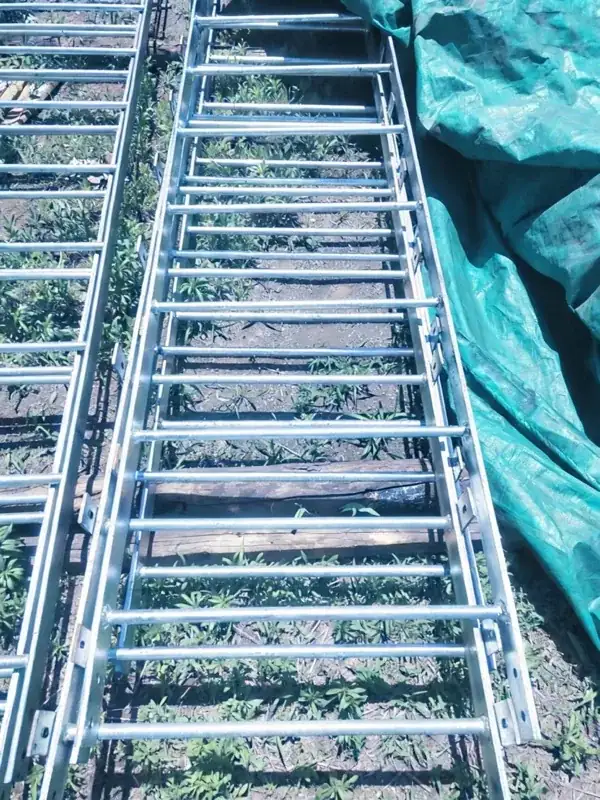
Material choice comes first. We cut side rails and rungs from Q235B structural steel for most jobs. For washdown or coastal sites we switch to SS304, or SS316 where chlorides run high. Hot-dip galvanizing runs 70–85 µm as standard, with powder coat over zinc when colour matters.
Then the proof. Every batch is sample-pulled for weld strength on a tensile rig, not just eyeballed. Each rung is rated to carry a single concentrated load, and we proof-test rungs to 1.5 kN before shipment.
The factory holds ISO 9001:2015. Third-party inspection by SGS, TÜV, or Bureau Veritas is available on request, and we have shipped to 50+ countries since 2003.
Fixed ladder inspection requirements differ by market, but the field check is the same everywhere. Look at rungs and rails for cracks, bends, or corrosion. Check bolts, welds, and standoff brackets for tightness. Check cage hoops or the safety-system rail for free travel. Pull from service the moment something looks wrong. Need a service eye on site? Our inspection and service fixed ladder line is built for it.
Export Documentation and Factory-Direct
Compliance lives in the file as much as the steel. Each order leaves with material certificates, weld reports, and load-test data — the paperwork an inspector or an AHJ asks for. Buying direct means no middleman markup and no guesswork. You talk to the engineers who weld the ladder.
Two jobs from our records show the pattern. A facilities contractor in the UK ordered caged fixed ladders to BS 4211 for a plant-room retrofit; we supplied hot-dip galvanized Q235B with batch weld reports, and the set cleared sign-off first time. A water utility in Australia ordered vertical ladders with safety systems to AS 1657 for a tank farm; we ran SS316 throughout for chloride resistance, and the site passed its fall-protection audit on the first visit.
Buyers are welcome to audit the plant in person. Start with the basics on what a fixed ladder is, then send us your height, the standard, and the fall-protection method. We return a drawing, a load rating, and a factory-direct quote.
Talk to our engineers, or compare the fixed ladder safety system and vertical fixed access ladder ranges.