Picking fall protection for a tall fixed ladder comes down to three real choices. A cage ladder vs guardrail vs fall arrest decision shapes your cost, your compliance, and your next safety audit. This guide is a straight cage ladder comparison that helps you choose the right ladder safety system the first time.
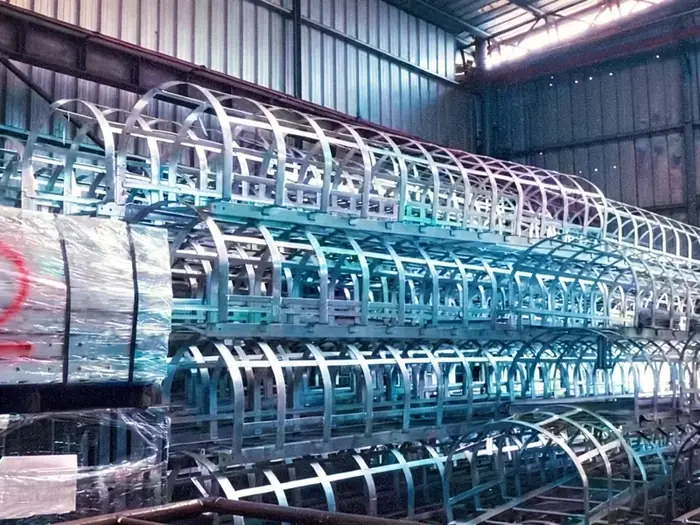
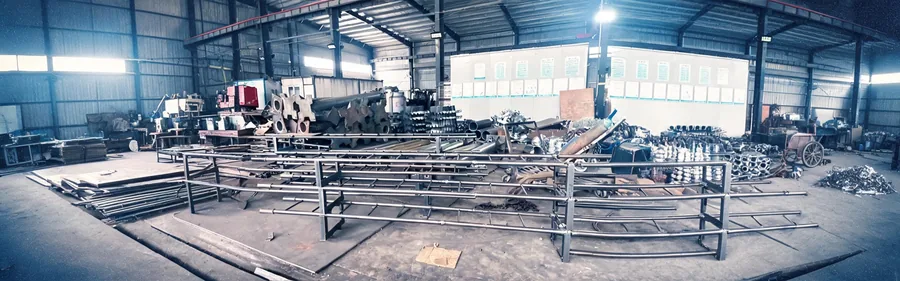
We weld all three at our 8,000 m² Shijiazhuang factory. The rules changed in 2018, and a hard OSHA deadline lands in 2036. Read the table, check the code, then match the system to your site.
The Three Options Explained
Each option solves the same problem a different way. Here is what each one is.
Safety cage
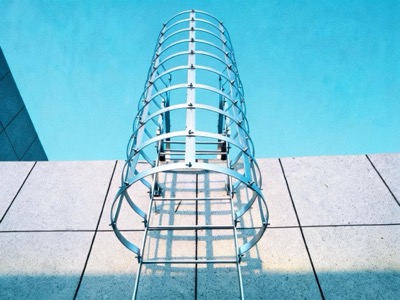
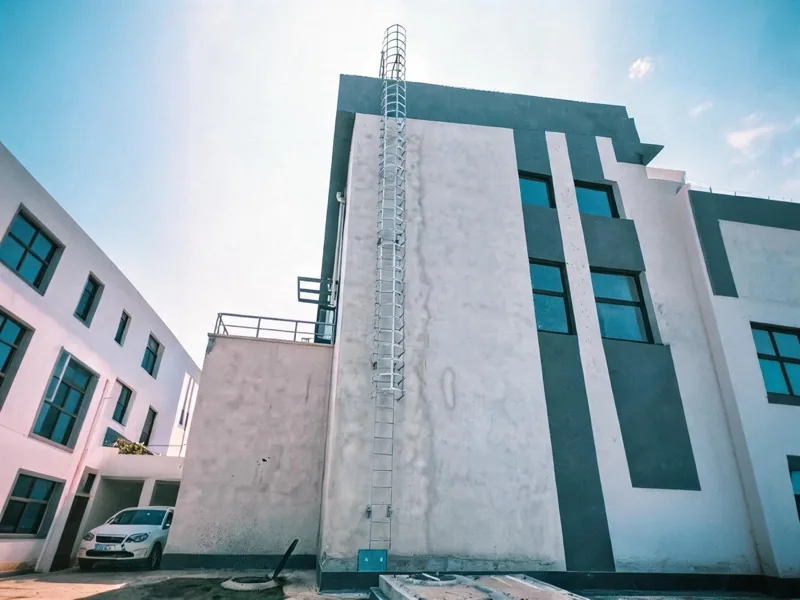
A ladder safety cage is the ring of steel hoops around the climber. It steers a slip toward the hoops instead of open air. Cages suit existing assets and short, low-traffic climbs. See our ladder safety cage system and caged roof access ladder ranges.
Guardrail
A guardrail protects the platform, not the climb. It rings landings, walkways, and roof edges with a top rail near 1,100 mm. Use it where the fall risk sits at the top, not on the rungs.
Personal fall arrest system (PFAS)
A PFAS ties the worker to the structure. A harness clips to a vertical cable or rigid rail, and a carriage locks on a fall. This is the system OSHA now wants on tall new ladders. Compare our fixed ladder safety system with the vertical fixed access ladder.
Side-by-Side Comparison Table
Here is the cage ladder comparison at a glance. Costs are relative, not absolute.
| Factor | Safety cage | Guardrail | Personal fall arrest (PFAS) |
|---|---|---|---|
| Upfront cost | Low | Low to medium | Medium to high |
| OSHA status (new >24 ft ladders) | Not accepted alone | Platform only | Accepted |
| EN ISO 14122-4 | Allowed with rest platforms | Edge protection only | Accepted |
| Retrofit difficulty | Moderate | Low | Low to moderate |
| Maintenance | Low (visual checks) | Low | Higher (rail, carriage, anchors) |
| Best use scenario | Existing short climbs | Landings and edges | Tall new vertical ladders |
Engineer's note: on our floor, we ask for the climb height first. Above 24 ft (7.3 m), a cage alone fails a US audit. A rail or cable system passes.
Where the Codes Stand
The codes split the duty. OSHA and EN take different routes to the same goal.
OSHA 1910.28(b)(9) sets the trigger at 24 ft (7.3 m) to the next landing. Two dates matter:
- 19 November 2018 — new ladders over 24 ft can no longer use a cage as fall protection.
- 18 November 2036 — every existing ladder over 24 ft must convert to a PFAS or a ladder safety system.
Construction detail sits in OSHA 1910.23. System loads sit in 1910.140. Each anchorage holds 22.2 kN (5,000 lbf) per worker, and the system caps arrest force on the body at 8 kN. For the clause-by-clause read, see our OSHA 1910.23 fixed ladder requirements.
Europe runs a different path. EN ISO 14122-4 still allows guard hoops, paired with rest platforms that break a long climb into shorter runs. It caps rung pitch at 300 mm. The UK adds BS 4211 for permanently fixed ladders. See our guide to EN ISO 14122-4 fixed ladder requirements. For every system in depth, read our fixed ladder fall protection guide.
Cost & Retrofit Considerations
Sticker price is only half the story. Retrofit and upkeep decide the real cost over ten years.
A cage is cheap to buy and cheap to maintain. It still cannot make a tall new ladder compliant on its own. A PFAS rail costs more upfront, yet it meets the code and lasts. Buying factory-direct strips the middleman markup off every metre.
Material choice drives both price and life. We cut rails and rungs from Q235B structural steel for most jobs. For washdown or coastal sites we switch to SS304, or SS316 where chlorides run high. Hot-dip galvanizing runs 70 to 85 µm as standard.
One job from our records: a operator retrofitted tall tank ladders from cage-only to rigid-rail PFAS ahead of the 2036 deadline. We supplied SS316 throughout, with batch load-test reports and weld certificates. The site cleared its fall-protection audit on the first visit.
Every batch is sample-pulled for weld strength on a tensile rig, not just eyeballed. Each order ships with material certificates, weld reports, and load-test data — the paperwork an inspector asks for. Our factory holds ISO 9001:2015, and third-party inspection by SGS, TÜV, or Bureau Veritas is available on request. We have shipped to 50+ countries since 2003, and buyers are welcome to audit the plant in person.
How to Choose: A Scenario Decision Guide
Match the system to the site. Use this as a quick decision guide.
- New ladder over 24 ft — specify a PFAS rail or cable. A cage will not pass. This is the core cage ladder vs guardrail call most plants face.
- Existing cage, tall ladder — plan a rail retrofit before November 2036.
- Short climb under 24 ft — a cage or a simple guardrail may be enough.
- Fall risk at a landing or edge — a guardrail is the right tool, not a climb system.
- Coastal or washdown site — choose SS316 and a sealed rail carriage.
Still unsure? Send the climb height, the standard, and a photo. We return a drawing, a load rating, and a factory-direct quote.
Start with our pillar guide on cage ladders, then talk to our engineers or browse the FAQ.